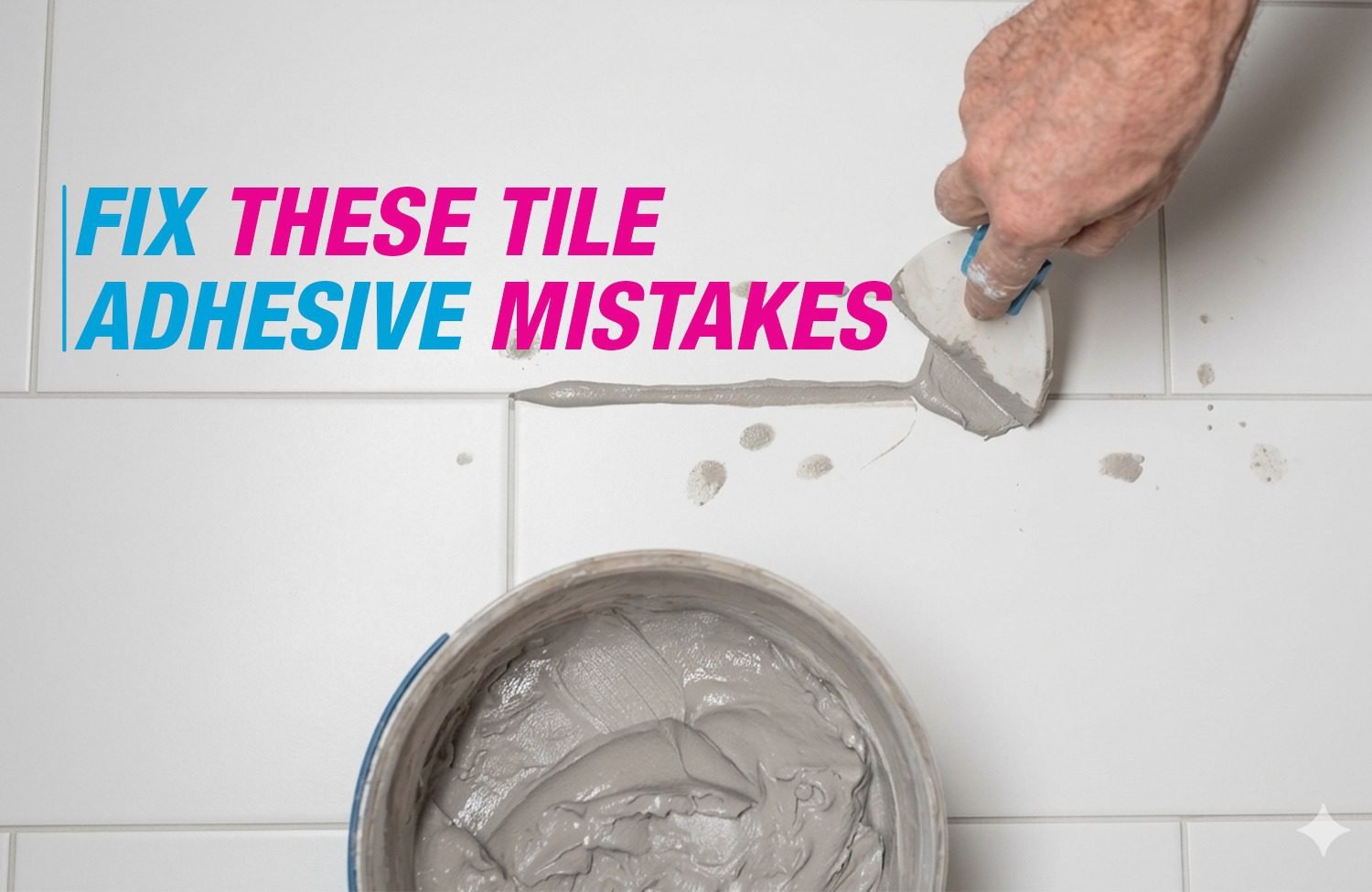
In India, tiles define the appearance of a place, and this expands the construction industry, their performance is increasingly decided by what lies beneath, the adhesive. With India’s building sector expected to reach approximately $1.4 trillion and urban housing demand rising fast, the usage of tile adhesives is increasing steadily (roughly 7-8% CAGR).
A long-lasting and attractive tile installation does not just rely on the quality of tiling material you use; it also relies on the effectiveness of the adhesive that you apply to tiles. Most frequent tiling issues e.g., cracks, hollow sounds, or tiles becoming loose, are usually as a result of preventable errors in the adhesive application process.
Whether you’re a professional or a DIY-er, being familiar with these mistakes can help you reach the end result, which is a successful and durable one.
Table of Contents
ToggleTop 10 Mistakes to Avoid When Applying Adhesive for Tiles
Now, we are going to discuss the most frequent mistakes that are committed by people when working with tile fixing adhesive and ways to prevent them.
1. Selecting the wrong type of adhesive for tiles
The most common errors that can be made when installing tiles include use of the wrong adhesive. Various settings and types of tiles need special adhesives to be bonded.
Indicatively, places that are vulnerable to moisture including bathrooms, kitchens, and balconies need a waterproof adhesive to avoid water damages and breaking of tiles. Equally, the wall adhesives might not be powerful to sustain floors whereby tiles are more prone to pressure and foot traffic. The comparison of wall and floor tile adhesive is a criterion that is necessary in selecting the product.
2. Missing On Surface Preparation
The preparation of the surface is the key to success when installing tiles. Sticking adhesive on a dirty or rough surface could also lower the bonding strength to a great extent.
The performance of the adhesive can be disturbed by dust, grease, moisture, and old residues. Application of tile floor cleaner assists in making sure that the ground is not contaminated. Also, the surface must be smooth and totally dry with no moisture when any tile fixing adhesive is applied.
Failure to give this step commonly results in the loosening or movement of tiles with time.
3. The Adhesive and Tiles were not Mixed Correctly
The majority of tile adhesive fixing products are powder-based and require the use of water for mixing. The adhesive has the tendency to become weak due to improper mixing.
Extra water will result in the weakening of the adhesive, whereas lack of adequate water will result in the hardening of the adhesive. Lumps can be formed due to uneven mixing thus resulting in inconsistency. One should also take care to follow instructions of the manufacturer and leave the mixture to rest for a few minutes before it is used.
4. Using Too Strong or Too Weak Glue
The amount of tile adhesive for floor tiles used is very significant in the performance of the tiles. Too much adhesive will result in uneven tiles and prolongs drying period whereas too little adhesive will result in poor bonding and hollow spaces under tiles.
Good use will make the adhesive tiles to be well supported throughout their surface, which minimizes the possibilities of cracking, or breaking.
5. The Wrong Trowel Technique
The adhesive application method is also as critical as the material. Plastering adhesive in a random fashion or without a fixed design may leave spaces between the adhesive that allow the air to flow through, thus reducing the strength.
The uniform ridges should be formed by a notched trowel, and these should enable the tile and the surface to be in greater contact. In bigger tiles, more adhesive can be placed on the back of the tile to cover it completely and have a better adhesive ability.
6. Ignoring Open Time and Setting Time
Each adhesive possesses a certain amount of open time within which tiles are supposed to be laid. This should be observed because the adhesive might begin drying before it is installed, leading to failure to bond tiles.
Dividing into smaller parts will be of assistance in keeping the work in control and the installation of the tile takes place within the suggested time. It is also critical to ensure that the curing process is given time before stepping on the tiles or undertaking the subsequent processes.
7. Irregular Tile Positioning and Spacing
The wrong orientation and irregular spacing will influence the appearance and the longevity of the tiled surfaces. Close tiles or tiles that are not well arranged can move or break throughout their use.
Spacers are used to give the tiles even spacing which gives a professional look. One should always make adjustments when the adhesive is still in its working state.
8. Failing to Select Tile Type and Size
Various tiles need various adhesives. Tiles that are large in size, such as tiles, require a more secure bonding layer, whereas other materials such as porcelain need special adhesives because their absorption rate is low.
Application of improper floor tile adhesives to the floor tiles may jeopardize the whole installation process and will cause problems in the long run. It is necessary that the adhesive should match the type and size of the tiles in order to be durable and perform effectively.
9. Excluding Waterproofing in Wet Areas
One of the largest causes of threat to tile life is moisture. Applying a regular glue in wet places rather than a waterproof adhesive will lead to water leakage, mould growth, and consequently broken tiles.
The use of appropriate waterproofing and adhesive will be used to prevent any long term damages particularly on bathrooms, kitchens and the outside areas.
10. Hurrying the Grouting Process
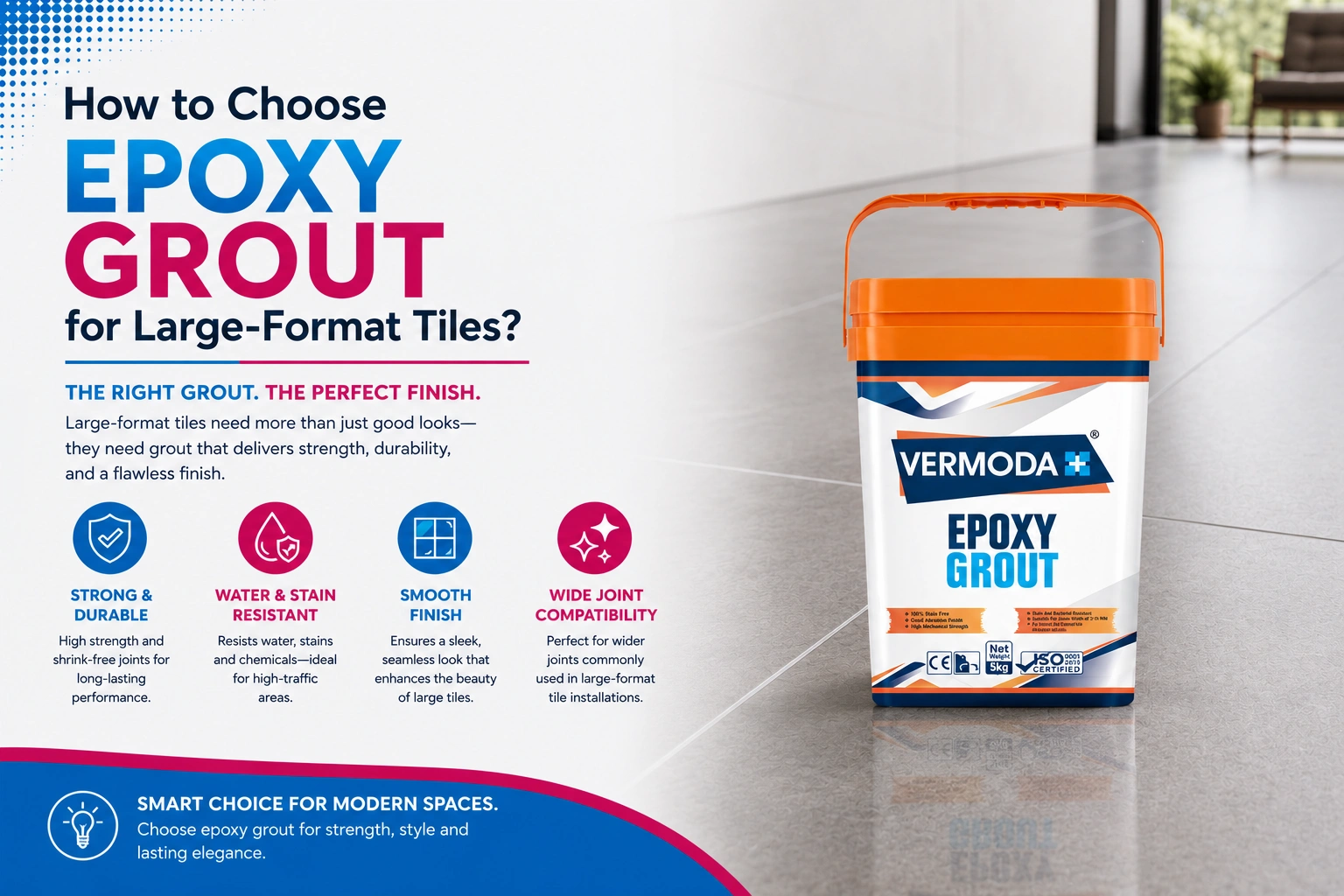
The grouting is also usually performed too early when the adhesive is not completely dry. If you choose the best epoxy grout for tiles from Vermoda Plus, it will be beneficial for tiles or otherwise it may cause havoc on the tiles and loosen the tiles and the surface.
The grout should be applied after sufficient time to cure. The selection of the most suitable epoxy grout to install tiles will also add to its durability and resistance to stains and the overall appearance.
Conclusion
It is important to use the right adhesive on tiles before that it’s important to know wall vs floor tile adhesive difference to have a stable and attractive tile implementation. Choosing the appropriate tile fixing adhesive to use, to how well the surface has been prepared and the techniques of application are all important in the result.
Such simple ways of avoiding such pitfalls not only help in strengthening and increasing the lifespan of your tiles, but also in the end result of the finishing. When done appropriately and with attention to detail, you will be able to have your tiles last long and stay as secure and stable as well as beautiful. Get the best Vermoda Plus adhesive for tiles and enjoy the best tile finish.