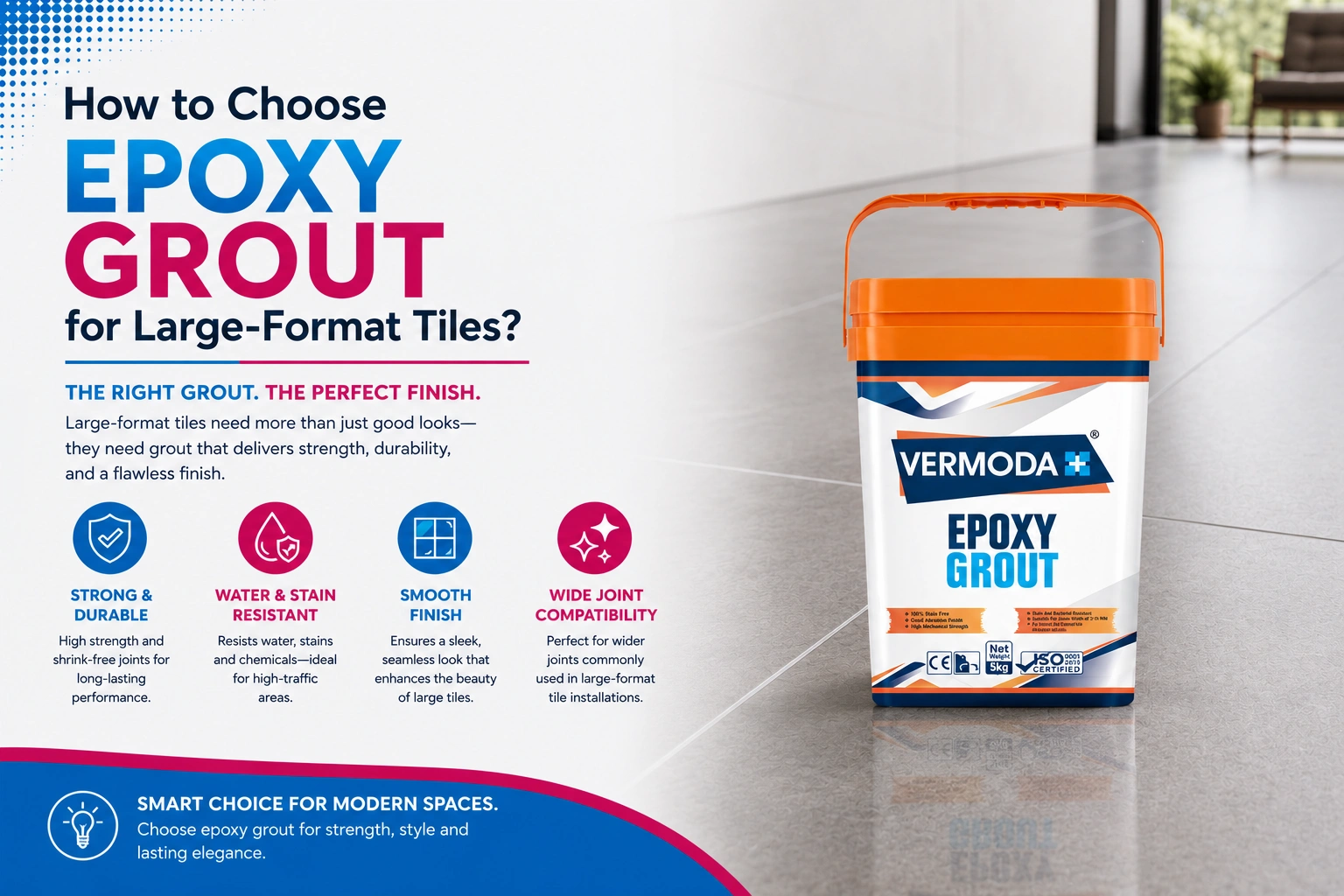
Epoxy grout for large tiles should be selected based on tile material, joint width, installation environment, expected traffic, moisture exposure, chemical exposure, and manufacturer specifications. Large-format tiles have fewer joints than small tiles, but correct joint preparation and grout selection remain important for durability, appearance, and long-term maintenance.
Large-format porcelain and ceramic tiles are increasingly used in modern residential and commercial projects.
Their large surface area creates a premium appearance, but installation requires careful attention to substrate flatness, adhesive coverage, alignment, and joint treatment.
Table of Contents
ToggleWhat Is Epoxy Grout?
Epoxy grout is a resin-based grout system designed to fill tile joints while providing strong resistance to moisture, stains, and many chemicals.
Unlike conventional cementitious grout, epoxy grout does not depend on cement hydration as its primary curing mechanism.
It is commonly considered for demanding areas such as:
- Bathrooms
- Kitchens
- Hotels
- Commercial spaces
- Hospitals
- Laboratories
- Swimming pools
- Industrial areas
Why Is Grout Selection Important for Large Tiles?
Large-format tiles have fewer grout joints per square metre, making every joint visually important.
A poor-quality or poorly selected grout can affect:
- Joint appearance
- Water resistance
- Stain resistance
- Maintenance
- Long-term aesthetics
- Overall installation quality
The grout should therefore be selected as part of the complete tile installation system.
What Should You Consider When Choosing Epoxy Grout?
1. Tile Type
Identify whether the tile is:
- Porcelain
- Ceramic
- Natural stone
- Glass
- Other compatible tile material
Always check grout compatibility with the tile manufacturer and grout manufacturer.
2. Joint Width
Large-format tiles are often installed with relatively narrow joints, but joint dimensions depend on tile specifications and installation requirements.
The epoxy grout must be suitable for the intended joint width.
3. Moisture Exposure
For bathrooms, showers, kitchens, pools, and other wet environments, moisture resistance becomes particularly important.
This is one reason epoxy grout for tiles is often considered for demanding wet-area applications.
4. Traffic
Commercial floors experience substantially more foot traffic than residential walls.
For high-traffic environments, grout should be selected according to expected mechanical and chemical exposure.
5. Cleaning Requirements
Areas such as commercial kitchens and healthcare facilities may require frequent cleaning.
A grout with suitable stain and chemical resistance can make maintenance easier.
Epoxy Grout vs Cement Grout for Large Tiles
| Feature | Epoxy Grout | Cementitious Grout |
|---|---|---|
| Water Absorption | Low | Product dependent |
| Stain Resistance | Generally high | Product dependent |
| Chemical Resistance | Generally high | Varies |
| Maintenance | Generally easier | May require more maintenance |
| Application | Requires careful mixing/application | Generally simpler |
| Wet Areas | Highly suitable for many applications | Application dependent |
| Cost | Usually higher | Generally lower |
The best choice depends on the project’s performance requirements rather than tile size alone.
Also Read: Is Epoxy Grout Completely Waterproof?
Step-by-Step Epoxy Grout Selection
Step 1: Identify the Tile
Confirm tile material, size, finish, and manufacturer requirements.
Step 2: Measure Joint Width
Determine the actual planned joint width.
Step 3: Identify the Environment
Is the installation residential, commercial, wet, industrial, outdoor, or high traffic?
Step 4: Determine Exposure
Consider water, cleaning chemicals, stains, traffic, and temperature.
Step 5: Check Product Compatibility
Ensure the epoxy grout is suitable for the tile and joint dimensions.
Step 6: Follow Application Instructions
Correct mixing, application, and cleaning are essential for epoxy grout performance.
Large-Format Tile Adhesive Matters Too
Choosing epoxy grout correctly does not compensate for inadequate tile bonding.
Large tiles require careful adhesive selection and installation.
The correct tile adhesive should provide suitable performance for the tile dimensions and substrate.
For wall installations, a suitable adhesive wall tiles solution should be selected according to technical requirements.
Role of Tile Joint Grout
The tile joint grout should be applied only after the adhesive has reached the required setting stage.
Before grouting:
- Check tile alignment
- Confirm joint cleanliness
- Remove loose debris
- Confirm adhesive has adequately set
- Follow the grout manufacturer’s instructions
Correct joint preparation contributes to a consistent finished appearance.
Common Mistakes With Large-Format Tile Grouting
- Selecting grout without checking joint width
- Grouting before adhesive has adequately set
- Mixing epoxy components incorrectly
- Leaving epoxy residue on tile surfaces
- Ignoring cleaning requirements
- Using incompatible cleaning products
- Assuming large tiles require less attention because they have fewer joints
A suitable tile stain remover may be used for compatible stains during maintenance, but epoxy grout cleaning should follow the product manufacturer’s instructions.
What About Grout Admix?
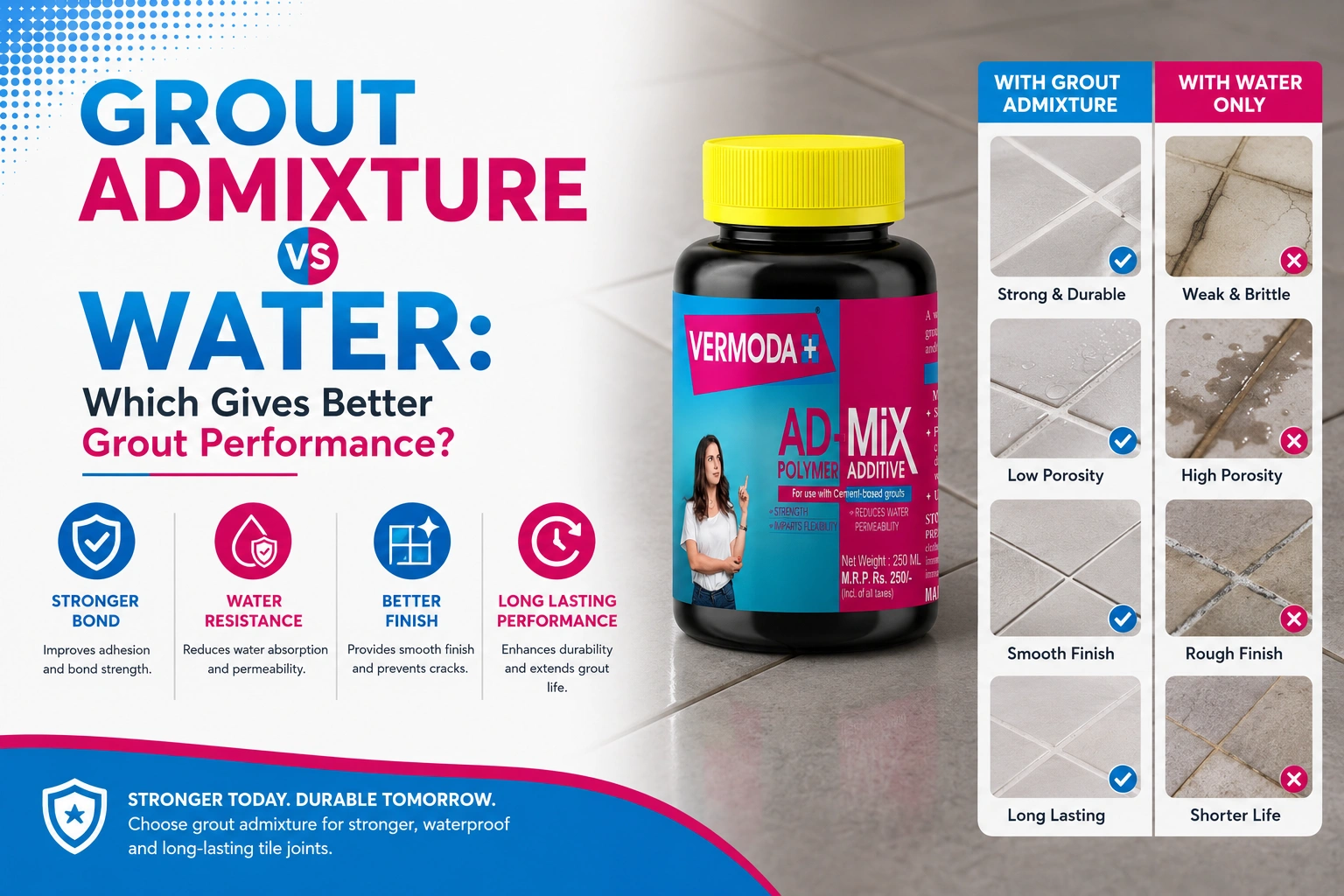
A grout admix is generally associated with compatible cementitious grout systems rather than epoxy grout.
Epoxy grout should not be modified with an admixture unless the manufacturer specifically permits it.
Similarly, white cement online products should not be substituted for purpose-designed epoxy grout in applications requiring epoxy grout performance.
Vermoda Plus Epoxy Grout Solutions
Vermoda Plus provides epoxy grout solutions for tile installation requirements where durability, moisture resistance, stain resistance, and ease of maintenance are important considerations.
The product range can support applications across residential, commercial, and demanding project environments.
Expert Recommendation
When selecting epoxy grout for large tiles, focus on the complete installation environment rather than tile size alone.
Consider the tile material, joint width, substrate, moisture exposure, traffic, cleaning requirements, and expected service conditions.
For large-format projects, coordination between the tile manufacturer, adhesive manufacturer, grout manufacturer, architect, and installer can help deliver a consistent result.
Key Takeaways
- Large-format tiles require careful grout selection despite having fewer joints.
- Joint width and tile material are important selection factors.
- Moisture and chemical exposure should influence grout choice.
- Epoxy grout offers strong resistance to moisture and stains in suitable applications.
- Correct adhesive selection remains essential for large-format tile bonding.
- Epoxy grout should be mixed and installed according to manufacturer instructions.
- Proper cleaning is critical because cured epoxy residue can be difficult to remove.
Frequently Asked Questions
Is epoxy grout suitable for large-format tiles?
Yes. Epoxy grout can be suitable for large-format tiles when its joint-width and tile compatibility requirements are met.
What is the best grout for large porcelain tiles?
The appropriate grout depends on joint width, location, moisture exposure, traffic, and maintenance requirements. Epoxy grout is suitable for many demanding applications.
Do large tiles require less grout?
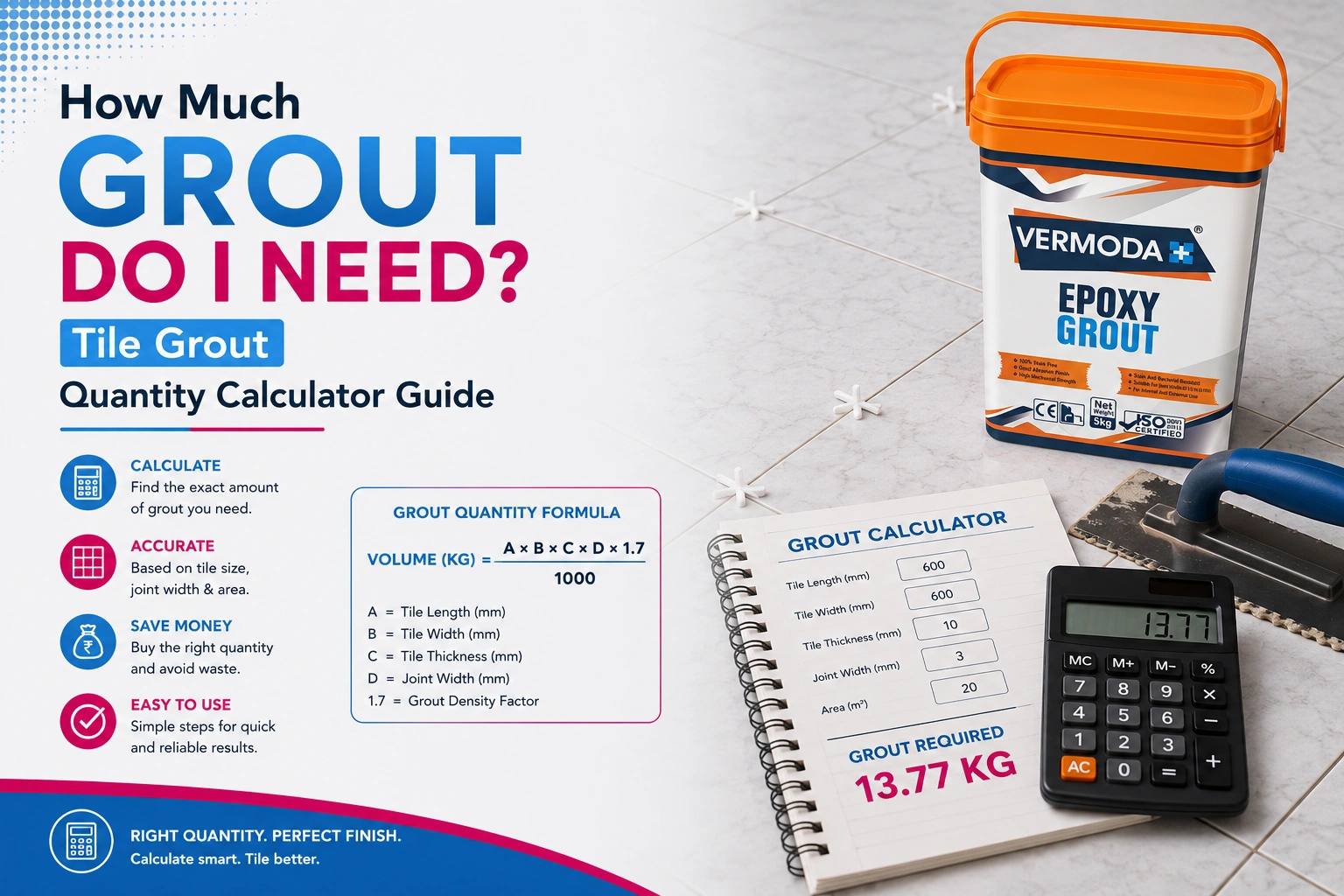
Generally, large tiles create fewer joints per square metre, which can reduce grout consumption.
What grout width should be used with large tiles?
Joint width should follow the tile manufacturer’s recommendations, installation standards, and project design requirements.
Is epoxy grout better than cement grout for large tiles?
Epoxy grout can offer advantages in moisture, stain, and chemical resistance, but the best choice depends on application requirements.
Can epoxy grout be used on bathroom large-format tiles?
Yes. Epoxy grout can be suitable for large-format bathroom tiles because of its moisture and stain resistance.
Can grout admixture be added to epoxy grout?
No, unless the epoxy grout manufacturer specifically permits it. Epoxy systems have their own mixing requirements.
How do you clean epoxy grout from large tiles?
Follow the epoxy grout manufacturer’s cleaning procedure during installation and remove residue before the grout fully cures.