Tile glue adhesive has become the preferred solution for modern tile installations because of its superior bonding strength, durability, and ease of application. However, even the best adhesive products can fail if they are not used correctly. Many tile installation issues arise due to common application mistakes that compromise bonding performance and reduce the lifespan of tiled surfaces.
Whether you are a builder, architect, contractor, project manager, or homeowner, understanding these mistakes can help you achieve stronger, more durable, and professional tile installations.
Table of Contents
ToggleWhy Proper Tile Glue Adhesive Application Matters?
The success of any tile installation depends on the strength of the bond between the tile and the substrate. Improper adhesive application can result in loose tiles, hollow sounds, cracking, water penetration, and costly repairs.
Using the correct installation methods helps:
- Improve tile durability
- Enhance bonding strength
- Reduce maintenance costs
- Prevent tile failures
- Increase project lifespan
Let’s look at the most common mistakes that should be avoided when using tile glue adhesive.
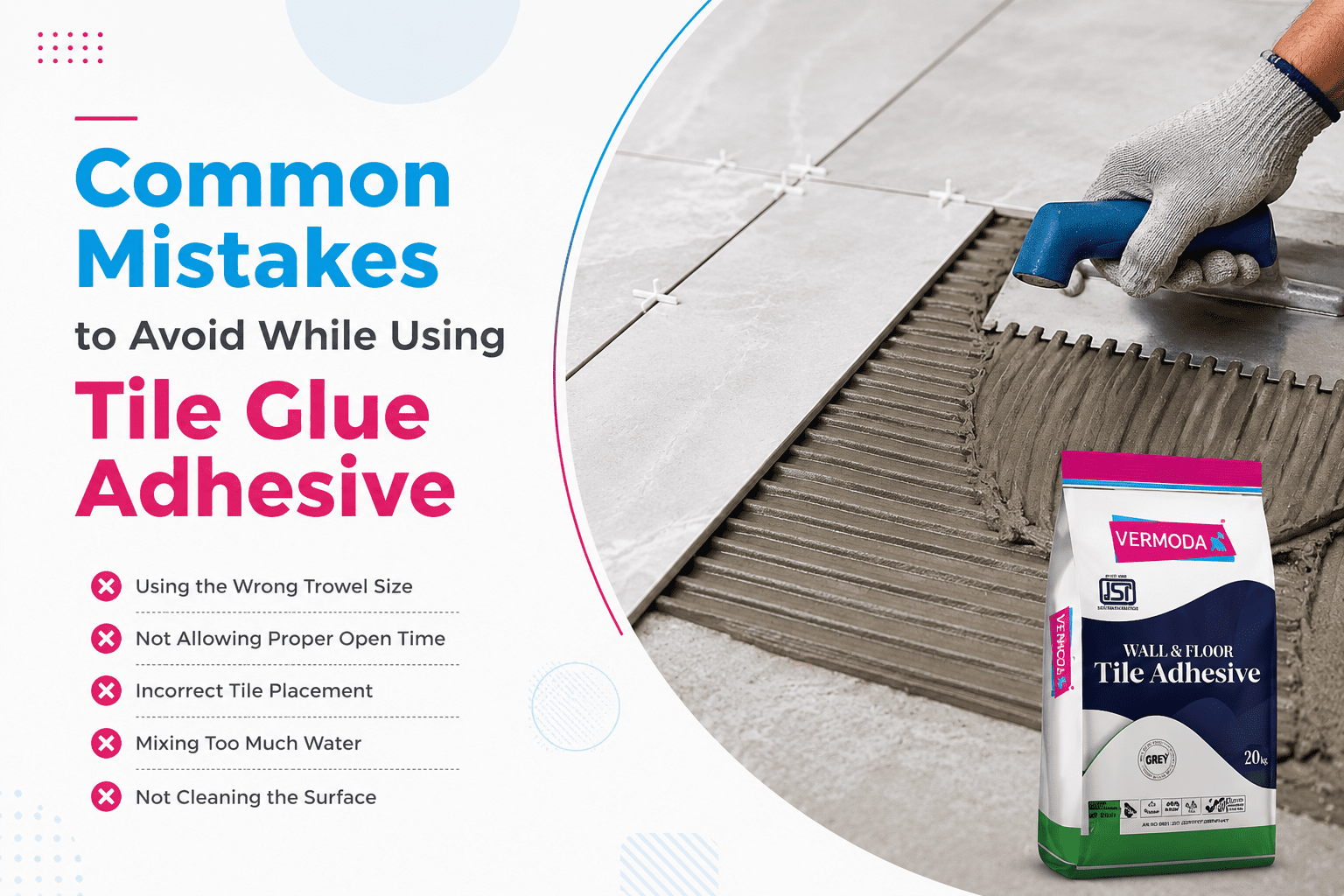
1. Choosing the Wrong Adhesive for the Application
One of the biggest mistakes in tile installation is selecting an adhesive that is not suitable for the tile type or installation environment.
Large-format tiles, porcelain tiles, outdoor surfaces, and wet areas require different adhesive formulations.
How to Avoid It
- Select adhesive according to tile size and material
- Consider indoor or outdoor usage
- Follow manufacturer recommendations
- Use professional-grade tile fixing adhesive products
2. Poor Surface Preparation
Applying adhesive on dirty, uneven, or weak substrates significantly reduces bonding performance.
Dust, grease, moisture, paint residue, and loose particles can prevent proper adhesion.
How to Avoid It
- Clean the substrate thoroughly
- Repair cracks and surface damage
- Ensure the surface is dry and level
- Remove all contaminants before installation
A properly prepared surface provides the foundation for long-lasting tile installations.
3. Incorrect Adhesive Mixing
Many installers use excessive water or fail to follow the recommended mixing ratio, resulting in reduced adhesive strength.
Incorrect mixing can lead to:
- Weak bonding
- Shrinkage
- Cracking
- Reduced durability
How to Avoid It
- Follow manufacturer instructions carefully
- Use the recommended water ratio
- Mix until a smooth consistency is achieved
- Avoid adding extra water during application
Proper mixing ensures maximum adhesive performance.
4. Applying Too Much or Too Little Adhesive
Uneven adhesive application is a common cause of tile failures. Insufficient coverage can create hollow spaces beneath tiles, while excessive adhesive may affect alignment and curing.
How to Avoid It
- Use the correct trowel size
- Maintain uniform adhesive coverage
- Follow recommended application thickness
- Back-butter large-format tiles when required
Consistent adhesive coverage improves bonding strength and load distribution.
Read Also: Why Tile Adhesive Failure Happens?
5. Ignoring Open Time and Curing Time
Every adhesive has a specified open time and curing period. Installing tiles after the adhesive has begun drying can weaken the bond significantly.
How to Avoid It
- Install tiles within the adhesive’s open time
- Avoid disturbing tiles during curing
- Protect installations from moisture and traffic during curing
Patience during curing leads to better long-term results.
6. Skipping Expansion Joints
Tiles naturally expand and contract due to temperature changes. Without expansion joints, stress builds up within the tiled surface and may cause cracking or adhesive failure.
How to Avoid It
- Include expansion joints where required
- Follow installation guidelines
- Plan movement joints for large areas
Expansion joints help maintain structural stability over time.
7. Using Low-Quality Adhesive Products
Cost-saving decisions often result in selecting low-quality products that fail to meet project requirements.
Low-quality adhesives may lead to:
- Reduced bonding strength
- Water damage
- Cracking
- Premature tile failure
Investing in high-performance adhesive products reduces long-term maintenance costs and project risks.
Role of Epoxy Tile Grout in Tile Performance
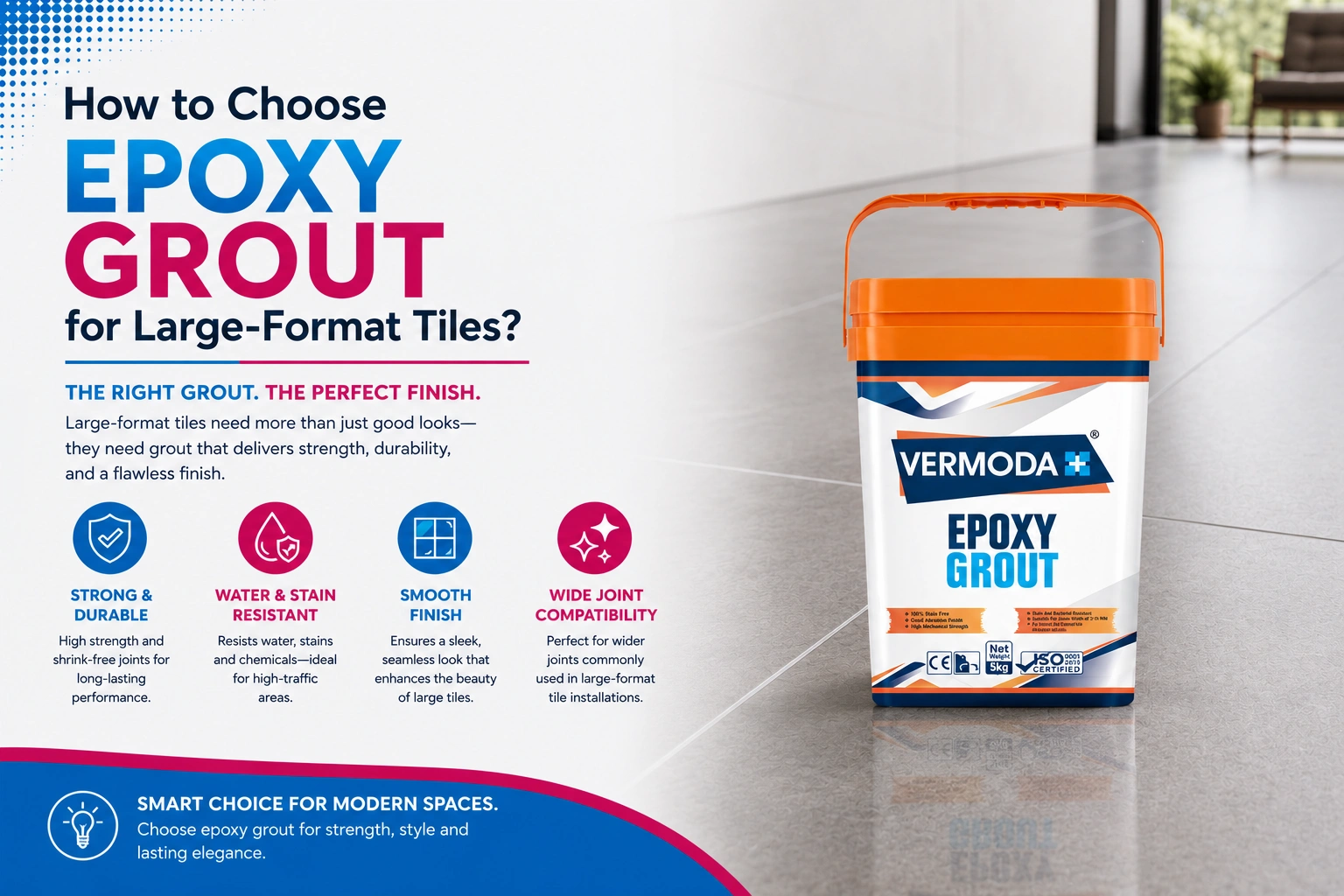
A strong tile installation system involves more than adhesive alone. Premium epoxy tile grout helps improve durability, water resistance, and overall installation quality.
Epoxy grout protects tile joints from moisture, stains, and chemical exposure, making it an excellent choice for commercial, industrial, and moisture-prone environments.
Importance of Tile Joint Grout
Using high-quality tile joint grout helps maintain tile alignment and protects installations from moisture penetration.
Benefits include:
- Improved tile stability
- Better water resistance
- Enhanced aesthetics
- Reduced maintenance requirements
Professional grout systems contribute significantly to long-term tile performance.
Maintaining Tiles with the Right Cleaning Products
Even properly installed tiles require regular maintenance. Using a suitable tiles cleaner liquid helps preserve the appearance of tiled surfaces without damaging grout joints or finishes.
Regular cleaning helps:
- Maintain aesthetics
- Prevent grout discoloration
- Improve hygiene
- Extend installation lifespan
Maintenance is especially important in commercial and high-traffic environments.
Vermoda Plus: One of India’s Leading Tile Adhesive Manufacturers
Vermoda Plus is recognized as one of the only best tile adhesive manufacturers in India offering one of the widest portfolios of advanced construction products.
From tile adhesives and epoxy grout systems to waterproofing solutions and construction chemicals, Vermoda Plus has established strong market dominance as one of India’s biggest manufacturers and suppliers.
The company serves residential, commercial, industrial, and infrastructure projects with innovative solutions designed for durability, performance, and long-term reliability.
Its extensive product range and commitment to quality continue to make Vermoda Plus a preferred choice among builders, architects, contractors, and developers across India.
Why Professionals Trust Vermoda Plus?
Construction professionals choose Vermoda Plus because of:
- Advanced product technology
- Consistent product quality
- Comprehensive product portfolio
- Technical expertise
- Reliable project performance
These advantages help deliver successful tile installations across a wide range of applications.
Conclusion
Tile glue adhesive offers excellent performance when applied correctly. However, mistakes such as poor surface preparation, incorrect mixing, inadequate coverage, and improper curing can lead to costly failures.
By following proper installation practices and using high-quality tile fixing adhesive systems, builders and contractors can improve tile durability, reduce maintenance issues, and ensure long-lasting results.
Vermoda Plus provides advanced tile adhesive and grout solutions designed to meet the evolving demands of modern construction projects across India.
FAQs
What is the most common tile adhesive mistake?
Poor surface preparation is one of the most common mistakes that leads to tile bonding failure.
Can incorrect adhesive mixing affect tile performance?
Yes. Incorrect mixing ratios can significantly reduce bonding strength and durability.
Why are expansion joints important?
Expansion joints allow movement caused by temperature changes and help prevent cracking.
Is epoxy grout necessary for tile installations?
Epoxy grout improves water resistance, durability, and long-term performance, especially in wet and high-traffic areas.
How can I improve tile installation lifespan?
Use quality adhesive products, proper installation techniques, suitable grout systems, and regular maintenance.
Contact Vermoda Plus
Looking for reliable tile adhesive and grout solutions?
- Call us: +91 9713200009
- Whatsapp us: +918708521730
- Email us: info@vermodaplus.com