White cement uses extend far beyond decorative finishes. From tile installation and wall repairs to architectural designs and premium flooring, white cement offers excellent aesthetics, durability, and versatility. It is widely used in residential, commercial, and industrial projects where a smooth finish, bright appearance, and long-lasting performance are essential.Modern construction focuses not only on structural strength but also on appearance and durability. While ordinary grey cement remains a popular construction material, white cement has become the preferred choice for projects requiring superior aesthetics, clean finishes, and decorative applications.Whether you’re constructing luxury homes, commercial buildings, hotels, hospitals, or retail spaces, understanding the various uses of white cement helps you select the right materials for long-lasting and visually appealing results.
For decorative applications, white cement provides significantly better visual results than conventional grey cement.Also Read: How Vermoda Plus is Revolutionizing Tile Installation Solutions?
Table of Contents
ToggleWhat is White Cement?
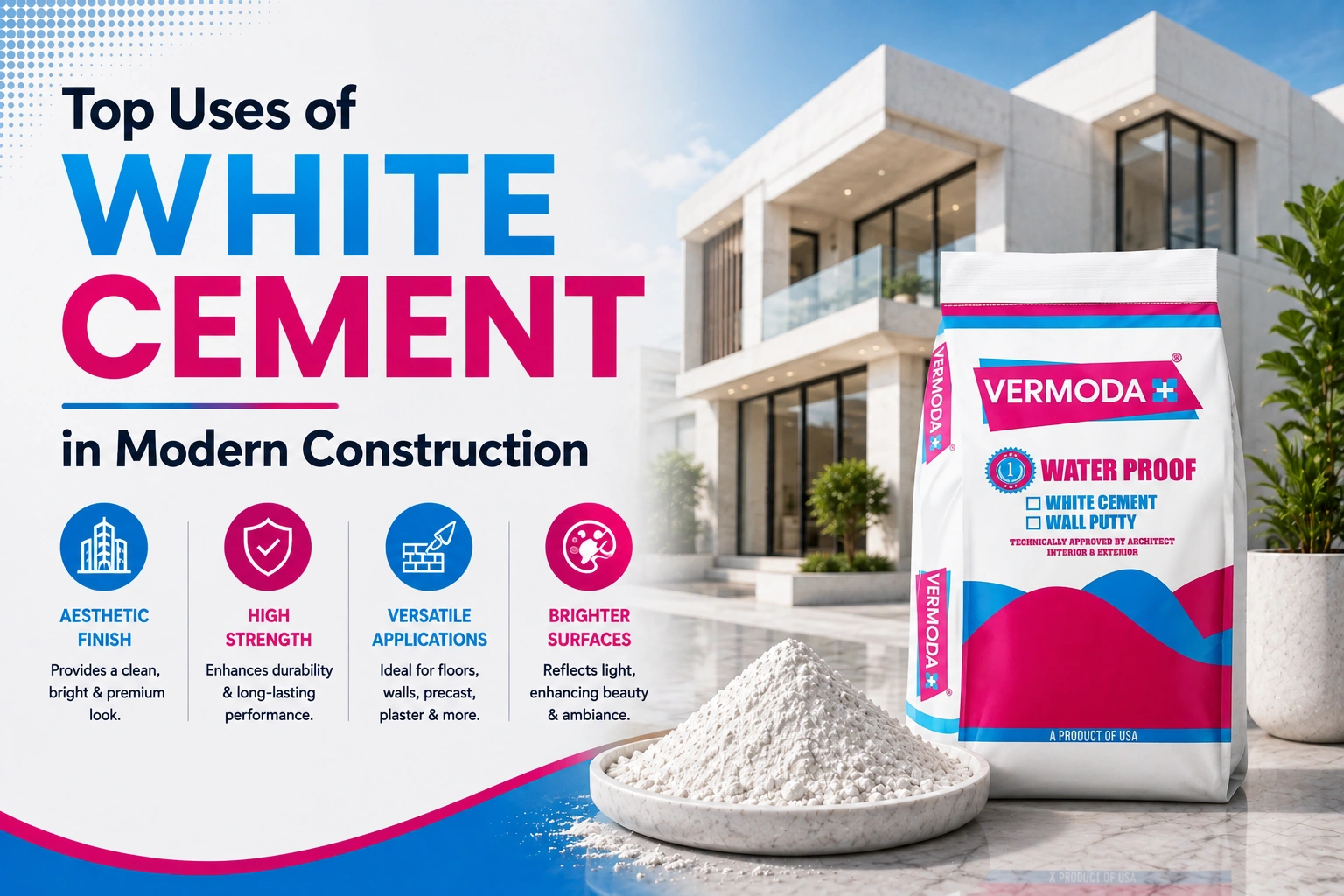
White cement is a premium type of Portland cement manufactured using raw materials with very low iron and manganese content. Its bright white colour makes it suitable for decorative construction, tile work, architectural finishes, precast elements, and repair applications.Unlike conventional cement, white cement provides a smooth, elegant finish and enhances the appearance of coloured surfaces, decorative tiles, and premium interiors.Today, white cement for tiles is widely used in combination with tile adhesives and grouts for aesthetically pleasing tile installations.Why is White Cement Important?
White cement serves both structural and decorative purposes.It is commonly selected because it:- Creates smooth and attractive finishes
- Enhances architectural designs
- Improves surface brightness
- Supports decorative applications
- Blends easily with pigments
- Provides excellent durability
- Delivers professional-quality finishes
Top Uses of White Cement
White cement has numerous applications across residential, commercial, and industrial projects.1. Tile Installation and Finishing
One of the most common white cement uses is filling and finishing around tile installations.Although modern floor tile adhesive provides the primary bond between tiles and substrates, white cement is often used for finishing details, surface corrections, and decorative applications where a clean appearance is required.2. Decorative Wall Finishes
Architects frequently specify white cement for decorative wall textures, designer finishes, and premium interior surfaces.Its bright colour enhances paints and decorative coatings while producing elegant architectural effects.3. Joint Repairs
Small cracks, surface defects, and repair work can be completed using white cement because it provides a smooth and attractive finish.When combined with premium tile grout, it helps improve the appearance of repaired tiled surfaces.4. Architectural Elements
White cement is extensively used for:- Decorative mouldings
- Sculptures
- Cornices
- Precast panels
- Designer facades
- Exterior ornaments
5. Terrazzo Flooring
Luxury commercial buildings often use white cement as the binding material for terrazzo flooring.Its bright colour enhances marble chips and decorative aggregates, creating premium flooring with exceptional durability.6. Tile Repair and Renovation
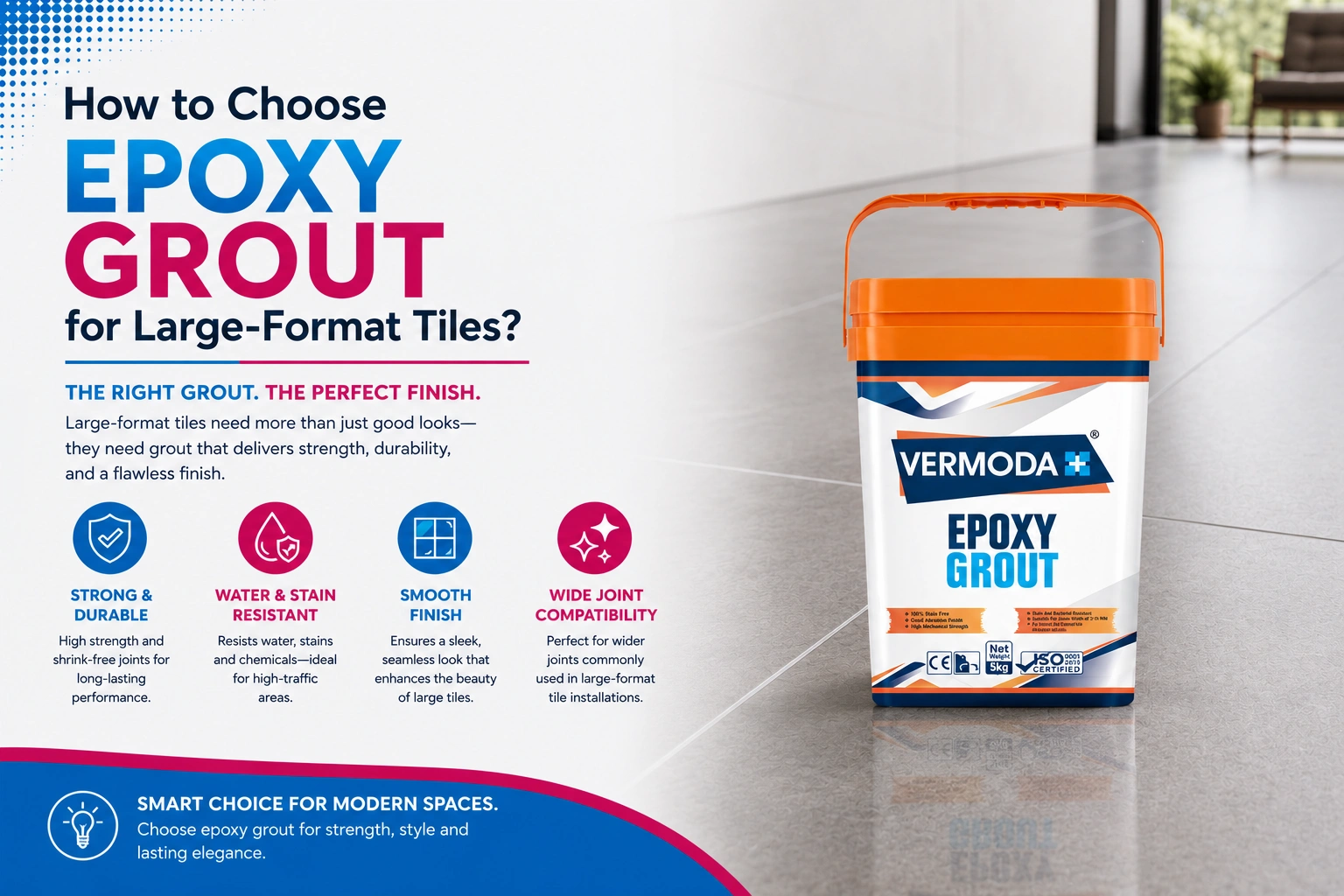
During renovation projects, white cement assists in repairing damaged edges, filling small surface imperfections, and improving tile aesthetics.For complete waterproof installations, it works alongside epoxy grout for floor tiles, which offers superior stain resistance and moisture protection.7. Exterior Decorative Applications
White cement is widely used for exterior facades because of its weather resistance and ability to maintain bright, attractive finishes over time.Benefits of White Cement
Builders, contractors, and architects choose white cement because of its numerous advantages.- Premium appearance
- Excellent surface finish
- High brightness
- Compatible with pigments
- Durable performance
- Smooth application
- Suitable for decorative construction
- Improves project aesthetics
White Cement vs Grey Cement
| Feature | White Cement | Grey Cement |
| Colour | Bright White | Grey |
| Decorative Finish | Excellent | Limited |
| Pigment Compatibility | Excellent | Moderate |
| Architectural Applications | Ideal | Limited |
| Surface Appearance | Premium | Standard |
| Tile Finishing | Excellent | Moderate |
| Cost | Higher | Lower |
| Aesthetic Value | Excellent | Moderate |
How to Use White Cement Effectively
Following proper application practices ensures maximum performance.Step 1: Prepare the Surface
Ensure the substrate is clean, dry, and free from dust or loose particles.Step 2: Select Compatible Materials
Use premium floor tile adhesive for tile bonding and white cement for decorative finishing where appropriate.Step 3: Mix Correctly
Follow manufacturer recommendations for water proportions to achieve the desired consistency.Step 4: Apply Evenly
Spread white cement uniformly to achieve smooth, consistent finishes.Step 5: Complete the Tile System
For waterproof and durable tile joints, combine white cement finishing with premium epoxy grout for tiles.Common Mistakes to Avoid
Avoid these mistakes when working with white cement:- Using incorrect water ratios
- Applying on dirty surfaces
- Skipping proper curing
- Using white cement instead of tile adhesive for bonding
- Ignoring manufacturer recommendations
- Choosing incompatible finishing materials
Vermoda Plus – India’s Leading Tile Grout Manufacturer
Vermoda Plus is the only tile grout manufacturer in India offering one of the industry’s widest portfolios of tile installation products. With advanced manufacturing technology and an extensive range of tile adhesives, epoxy grouts, waterproofing systems, construction chemicals, and finishing materials, Vermoda Plus has established itself as one of India’s biggest manufacturers and suppliers.Trusted by builders, architects, contractors, project managers, and infrastructure professionals, Vermoda Plus delivers complete tile installation solutions designed for strength, durability, and superior aesthetics.Expert Recommendation
Industry experts recommend using white cement primarily for decorative and finishing applications rather than tile bonding. For reliable installations, combine premium floor tile adhesive, epoxy grout for tiles, and compatible finishing products from Vermoda Plus to achieve durable, waterproof, and visually appealing tiled surfaces with minimal maintenance.Summary / Key Takeaways
- White cement is ideal for decorative finishes, repairs, and architectural applications.
- It provides superior brightness and aesthetic appeal compared to grey cement.
- White cement should complement—not replace—modern tile adhesive systems.
- Combining white cement with epoxy grout enhances both durability and appearance.
- Vermoda Plus offers complete tile installation solutions for residential, commercial, and industrial projects.
Frequently Asked Questions
1. What are the main uses of white cement?
White cement is used for decorative finishes, tile repairs, architectural designs, terrazzo flooring, and premium wall finishes.2. Can white cement be used for tiles?
Yes. White cement is suitable for finishing and repairs, while tile adhesive is recommended for tile bonding.3. What is white cement mainly used for?
It is mainly used for decorative construction, architectural elements, wall finishing, and coloured concrete applications.4. Is white cement stronger than grey cement?
Both have similar strength, but white cement offers superior aesthetics and decorative performance.5. Can white cement be used outside?
Yes. White cement is widely used for exterior facades, precast panels, sculptures, and decorative architectural elements.6. Can white cement be coloured?
Yes. White cement blends easily with pigments to create vibrant decorative finishes.7. Is white cement waterproof?
White cement has limited water resistance and should be paired with waterproofing systems and epoxy grout in wet areas.Contact Vermoda Plus
Need expert guidance on choosing the right products for your tile installation or finishing project?- Call us: +91 9713200009
- Whatsapp us: +918708521730
- Email us: info@vermodaplus.com