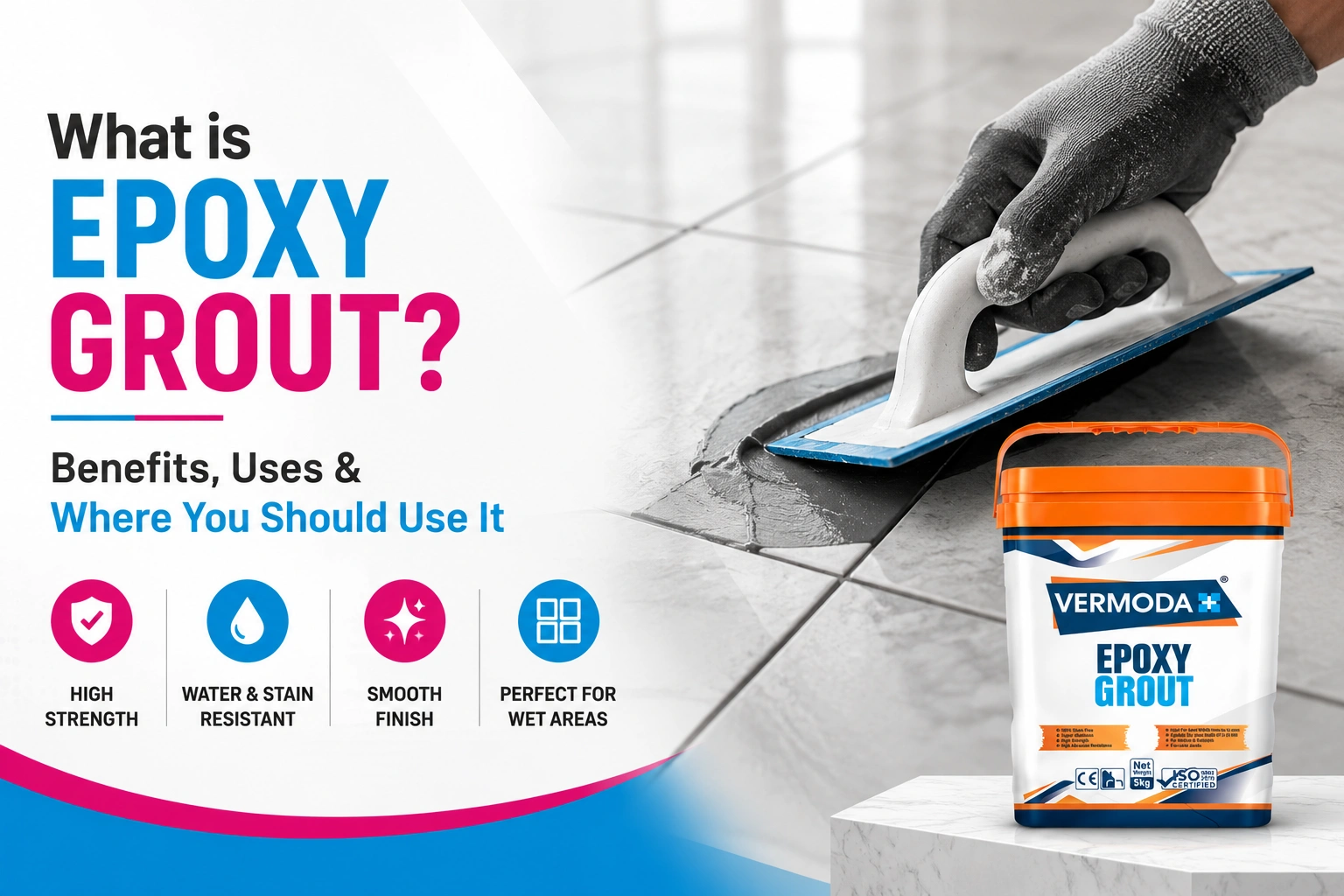
Epoxy grout is a high-performance tile joint filling material made from epoxy resins and hardeners instead of cement. It offers superior waterproofing, stain resistance, chemical resistance, and durability, making it the preferred choice for residential, commercial, industrial, and high-moisture environments where long-lasting tile installations are essential.
Modern tile installations demand more than beautiful tiles—they require strong, durable, and hygienic joints that can withstand moisture, stains, chemicals, and heavy foot traffic. While traditional cement grout has been widely used for years, epoxy grout has become the preferred solution for architects, builders, contractors, and homeowners looking for long-term performance with minimal maintenance.
Whether you’re installing tiles in a home, hospital, restaurant, swimming pool, commercial kitchen, or industrial facility, understanding epoxy grout can help you choose the right solution for lasting results.
Table of Contents
ToggleWhat is Epoxy Grout?
Epoxy grout is a premium tile joint filling material made by combining epoxy resin, hardener, and high-performance fillers. Unlike cement-based grouts, it forms a dense, non-porous joint that prevents water absorption, staining, and bacterial growth.
Because it does not absorb moisture, epoxy grout for tiles is ideal for areas constantly exposed to water, cleaning chemicals, oils, grease, and heavy usage.
It is commonly used with ceramic, vitrified, porcelain, marble, granite, mosaic, and natural stone tiles to create durable and aesthetically pleasing joints.
Why is Epoxy Grout Important?
The performance of a tiled surface depends not only on the quality of the tiles but also on the strength of the joints between them.
Conventional grout may:
- Absorb water
- Develop cracks
- Fade over time
- Stain easily
- Promote mould and mildew growth
Epoxy grout eliminates these common issues by providing a waterproof and highly durable joint that maintains its appearance for years.
For projects where hygiene, durability, and appearance matter, epoxy grout is an investment that delivers long-term value.
Benefits of Epoxy Grout
Epoxy grout offers several advantages over traditional cement grout.
• Excellent Waterproofing
Its non-porous surface prevents water penetration, making it ideal for wet areas.
• Superior Stain Resistance
Food, oil, coffee, chemicals, and dirt can be cleaned without permanently staining the grout.
• Chemical Resistance
Suitable for laboratories, hospitals, factories, and commercial kitchens where chemical exposure is common.
• Long-lasting Colour
Epoxy grout retains its original colour for years without fading or discoloration.
• Crack Resistance
Its flexible composition reduces the chances of shrinkage and cracking.
• Easy Maintenance
Routine cleaning with a suitable tiles cleaner liquid keeps the surface hygienic and attractive.
• Hygienic Surface
Its smooth finish prevents the growth of mould, fungi, and bacteria.
Epoxy Grout vs Cement Grout
| Feature | Epoxy Grout | Cement Grout |
|---|---|---|
| Waterproof | Excellent | Moderate |
| Stain Resistance | Excellent | Low |
| Chemical Resistance | Excellent | Limited |
| Maintenance | Very Low | High |
| Durability | Excellent | Moderate |
| Colour Stability | Excellent | May Fade |
| Mould Resistance | Excellent | Moderate |
| Lifespan | Long | Shorter |
Although epoxy grout has a higher initial cost, its durability and low maintenance make it a more cost-effective solution over time.
Also Read: Complete Tile Cleaning Guide
Where Should You Use Epoxy Grout?
Epoxy grout performs exceptionally well in environments where durability and hygiene are essential.
Recommended applications include:
- Bathrooms
- Kitchens
- Swimming pools
- Hospitals
- Hotels
- Shopping malls
- Restaurants
- Commercial kitchens
- Food processing plants
- Laboratories
- Pharmaceutical facilities
- Industrial flooring
- Educational institutions
- Airports
- Metro stations
Its waterproof and chemical-resistant properties make it one of the most versatile tile joint solutions available today.
How to Apply Epoxy Grout?
Proper installation ensures maximum performance.
Step 1
Allow the tile adhesive to cure completely before grouting.
Step 2
Clean tile joints thoroughly to remove dust and debris.
Step 3
Mix the epoxy resin and hardener according to the manufacturer’s instructions.
Step 4
Apply the grout evenly using a rubber float, ensuring complete joint filling.
Step 5
Remove excess grout before it hardens.
Step 6
Clean the tile surface using the recommended tiles cleaner liquid to achieve a smooth, professional finish.
Following the correct installation process ensures excellent waterproofing, strength, and aesthetics.
Common Mistakes to Avoid
Many grout failures occur due to incorrect installation.
Avoid these common mistakes:
- Mixing incorrect proportions
- Delaying surface cleaning
- Applying grout on dirty joints
- Using unsuitable cleaning chemicals
- Ignoring curing recommendations
- Choosing cement grout for high-moisture areas
Professional installation helps maximize the lifespan of epoxy grout.
Complete Tile Installation Starts with the Right Products
While epoxy grout provides exceptional joint protection, overall tile performance also depends on selecting the right tile adhesive chemical for strong bonding.
For decorative finishes and repair work, using the best white cement enhances aesthetics, while a quality grout admixture can improve grout flexibility and strength in specific applications.
A complete tile installation system ensures long-lasting performance from substrate preparation to final finishing.
Vermoda Plus – India’s Leading Construction Chemicals Manufacturer
Vermoda Plus is one of the only Construction Chemicals Manufacturers in India offering one of the largest portfolios of advanced tile installation solutions under one roof.
Its extensive product range includes premium tile adhesives, epoxy grout, waterproofing systems, tile joint grout, construction chemicals, white cement, grout admixtures, and surface preparation products.
With state-of-the-art manufacturing capabilities, continuous product innovation, and a strong nationwide presence, Vermoda Plus has established itself as one of India’s biggest manufacturers and suppliers of construction chemicals, trusted by architects, builders, contractors, developers, and infrastructure professionals.
Expert Recommendation
Industry experts recommend using epoxy grout for tiles wherever durability, hygiene, waterproofing, and stain resistance are priorities.
For the best results, combine high-quality epoxy grout with compatible tile adhesive systems and construction chemicals from a trusted manufacturer like Vermoda Plus. This integrated approach ensures superior bonding, longer service life, and lower maintenance costs.
Summary / Key Takeaways
- Epoxy grout offers superior waterproofing and stain resistance.
- It outperforms cement grout in durability and maintenance.
- It is ideal for wet, hygienic, and heavy-traffic environments.
- Proper installation ensures long-lasting performance.
- Combining premium tile adhesive, grout, and construction chemicals creates a reliable tile installation system.
Frequently Asked Questions
1. What is epoxy grout used for?
Epoxy grout is used to fill tile joints in bathrooms, kitchens, swimming pools, hospitals, restaurants, laboratories, commercial buildings, and industrial facilities where waterproofing and durability are essential.
2. Is epoxy grout better than cement grout?
Yes. Epoxy grout offers superior waterproofing, stain resistance, chemical resistance, durability, and colour retention compared to cement grout.
3. Can epoxy grout be used in bathrooms?
Absolutely. Its waterproof and mould-resistant properties make it one of the best choices for bathroom tile joints.
4. How long does epoxy grout last?
With proper installation and maintenance, epoxy grout can last for many years while maintaining its strength, colour, and performance.
5. Is epoxy grout difficult to clean?
No. Once cured, epoxy grout is easy to maintain using a suitable tiles cleaner liquid and routine cleaning methods.
6. Which tiles work best with epoxy grout?
Epoxy grout is suitable for ceramic, porcelain, vitrified, marble, granite, mosaic, and natural stone tiles.
7. Why should I choose Vermoda Plus epoxy grout?
Vermoda Plus epoxy grout delivers exceptional waterproofing, durability, stain resistance, and long-term performance, making it an excellent choice for residential, commercial, and industrial tile installations.
Contact Vermoda Plus
Looking for the right epoxy grout solution for your next project?
- Call us: +91 9713200009
- Whatsapp us: +918708521730
- Email us: info@vermodaplus.com