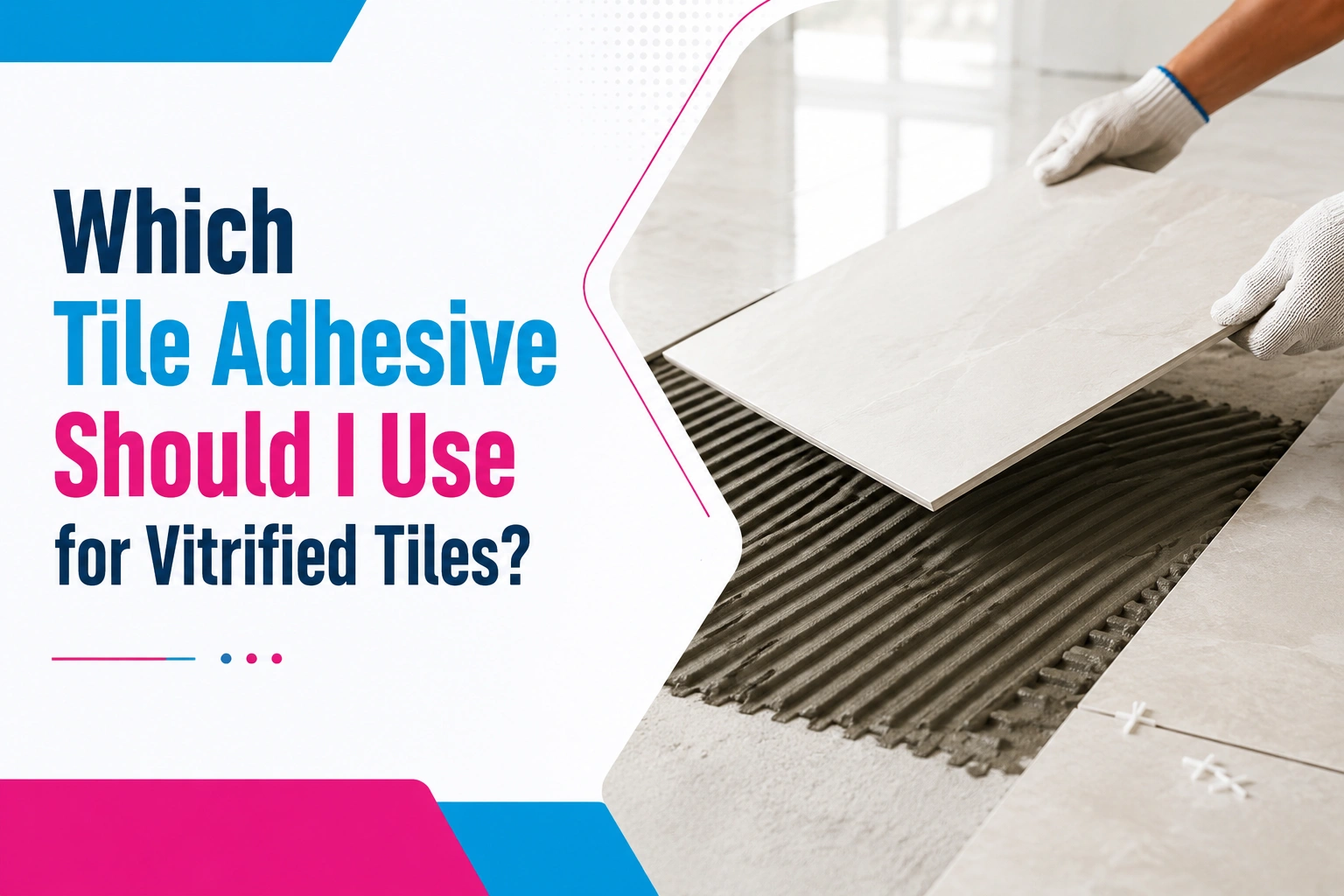
For vitrified tiles, use a polymer-modified cement-based tile adhesive that matches the tile size, installation area, and substrate. Standard vitrified floor tiles typically require a C1 or C2 adhesive, while large-format vitrified tiles, exterior applications, and high-traffic areas perform better with a high-performance C2 or flexible tile adhesive that provides stronger bond strength, reduced slip, and improved durability.
Table of Contents
ToggleUnderstanding the Right Tile Adhesive for Vitrified Tiles
Vitrified tiles are manufactured under high pressure and high temperatures, making them extremely dense with very low water absorption—typically below 0.5%. Unlike ceramic tiles, they absorb very little moisture, which means conventional cement mortar cannot develop sufficient adhesion.
Modern tile adhesive are engineered with cement, graded silica sand, polymers, performance additives, and water-retention agents. These ingredients create a stronger mechanical and chemical bond between the substrate and the tile.
Choosing the correct adhesive depends on several factors:
- Tile size and weight
- Indoor or outdoor installation
- Wall or floor application
- Concrete, plaster, or existing tile substrate
- Moisture exposure
- Expected traffic load
For example, a standard 600×600 mm vitrified floor tile in a residential room requires a different adhesive than a 1200×2400 mm vitrified slab installed on a commercial façade. Matching the adhesive specification to the application improves bond strength, minimises debonding, and extends installation life.
How to Choose the Right Tile Adhesive for Vitrified Tiles?
1. Identify the Tile Size
Smaller vitrified tiles generally require standard polymer-modified adhesives.
Large-format vitrified tiles need high-bond, non-sag adhesives designed to support additional weight while maintaining full coverage.
2. Check the Installation Location
Indoor dry areas place lower demands on adhesive performance.
Bathrooms, kitchens, balconies, terraces, swimming pools, and exterior walls require adhesives with enhanced water resistance and flexibility.
3. Evaluate the Substrate
Different substrates expand and contract differently.
Suitable substrates include:
- Cement plaster
- Concrete
- Cement screed
- Existing tiles
- Gypsum boards
- AAC blocks (with compatible adhesive)
The substrate should always be clean, cured, level, and free from dust or loose particles.
4. Select the Correct Adhesive Grade
Choose the adhesive based on project requirements.
| Application | Recommended Adhesive |
|---|---|
| Small vitrified floor tiles | Polymer-modified Silver Tile adhesive |
| Large vitrified floor tiles | High-performance Gold Tile adhesive |
| Vitrified wall tiles | Non-slip wall tile adhesive |
| Exterior vitrified tiles | Flexible C2 adhesive |
| Commercial flooring | Heavy-duty tile adhesive |
| Tile-on-tile installation | High-bond polymer-modified adhesive |
5. Follow the Correct Installation Method
Proper installation is equally important.
Professional installers typically:
- Mix adhesive according to manufacturer specifications.
- Allow the recommended slaking time.
- Use the correct notch trowel.
- Apply adhesive uniformly.
- Back-butter large-format tiles.
- Maintain recommended joint spacing.
- Check for adequate adhesive coverage.
Proper installation significantly reduces hollow sounds, cracked tiles, and bond failure.
Tile Adhesive Comparison for Vitrified Tiles
| Adhesive Type | Bond Strength | Suitable Tile Size | Best Application | Flexibility |
|---|---|---|---|---|
| Cement Mortar | Low | Small | Not recommended for vitrified tiles | Low |
| Silver Tile Adhesive | Good | Up to medium size | Residential flooring | Moderate |
| Gold Tile Adhesive | High | Large-format tiles | Commercial and exterior applications | High |
| Flexible Tile Adhesive | Very High | Large slabs | High movement areas | Excellent |
| Tile-on-Tile Adhesive | High | Medium to large | Renovation projects | High |
Practical Experience from Professional Tile Installations
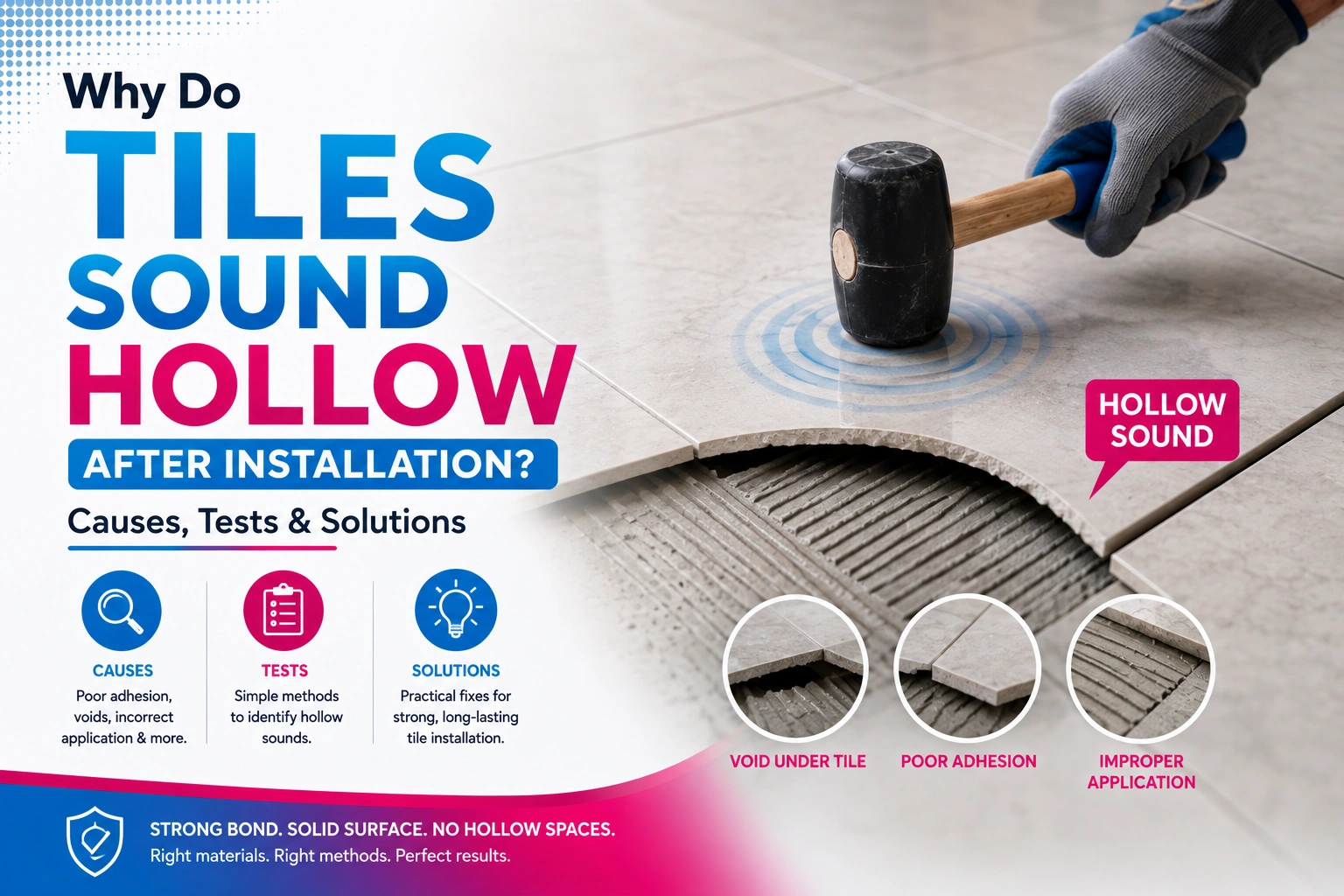
Across residential and commercial construction projects, one of the most common causes of tile failure is selecting an adhesive based only on price rather than application requirements. During site inspections, installers frequently observe hollow-sounding vitrified tiles where ordinary cement mortar or an underspecified adhesive was used on dense porcelain surfaces.
Projects that follow industry-recommended installation practices—including substrate preparation, polymer-modified adhesives, correct notch trowels, back-buttering for large-format tiles, and adequate curing—typically achieve much higher bond coverage and fewer call backs. Full adhesive contact beneath the tile distributes loads more evenly, reducing the likelihood of cracked tiles, edge lifting, or debonding over time. These practical observations reinforce why adhesive selection should always be based on tile characteristics and installation conditions rather than using a single product for every application.
Common Mistakes When Installing Vitrified Tiles
- Using ordinary cement mortar instead of tile adhesive.
- Selecting the wrong adhesive grade.
- Skipping back-buttering for large-format tiles.
- Installing on dusty or weak substrates.
- Mixing adhesive with excess water.
- Ignoring expansion joints.
- Walking on newly laid tiles before curing.
Avoiding these mistakes helps maximise installation performance.
Why Polymer-Modified Tile Adhesives Perform Better?
Polymer modification improves several critical performance characteristics:
- Higher bond strength
- Better flexibility
- Reduced shrinkage
- Improved water resistance
- Better impact resistance
- Longer service life
- Greater resistance to thermal movement
These properties make polymer-modified adhesives suitable for modern vitrified tiles and large-format porcelain installations.
Frequently Asked Questions
Which adhesive is best for vitrified floor tiles?
A polymer-modified Silver or Gold cement-based tile adhesive is generally recommended. Large-format, commercial, or exterior vitrified tiles benefit from a C2 or flexible adhesive with higher bond strength.
Can vitrified tiles be installed using cement mortar?
It is generally not recommended. Because vitrified tiles have very low water absorption, cement mortar cannot develop the strong bond required for long-term performance.
Do large vitrified tiles require special adhesive?
Yes. Large-format vitrified tiles should be installed using a high-performance adhesive designed for heavy tiles. Back-buttering is also recommended to improve coverage and bond strength.
How thick should tile adhesive be for vitrified tiles?
Most installations use an adhesive bed of approximately 3–10 mm, depending on the trowel size, tile dimensions, and substrate condition. Manufacturer recommendations should always be followed.
Can the same adhesive be used indoors and outdoors?
Not always. Outdoor installations experience greater temperature changes and moisture exposure, so flexible, high-performance adhesives are generally recommended for exterior applications.