Table of Contents
ToggleWhat Is the Best Epoxy Grout for Tiles in India?
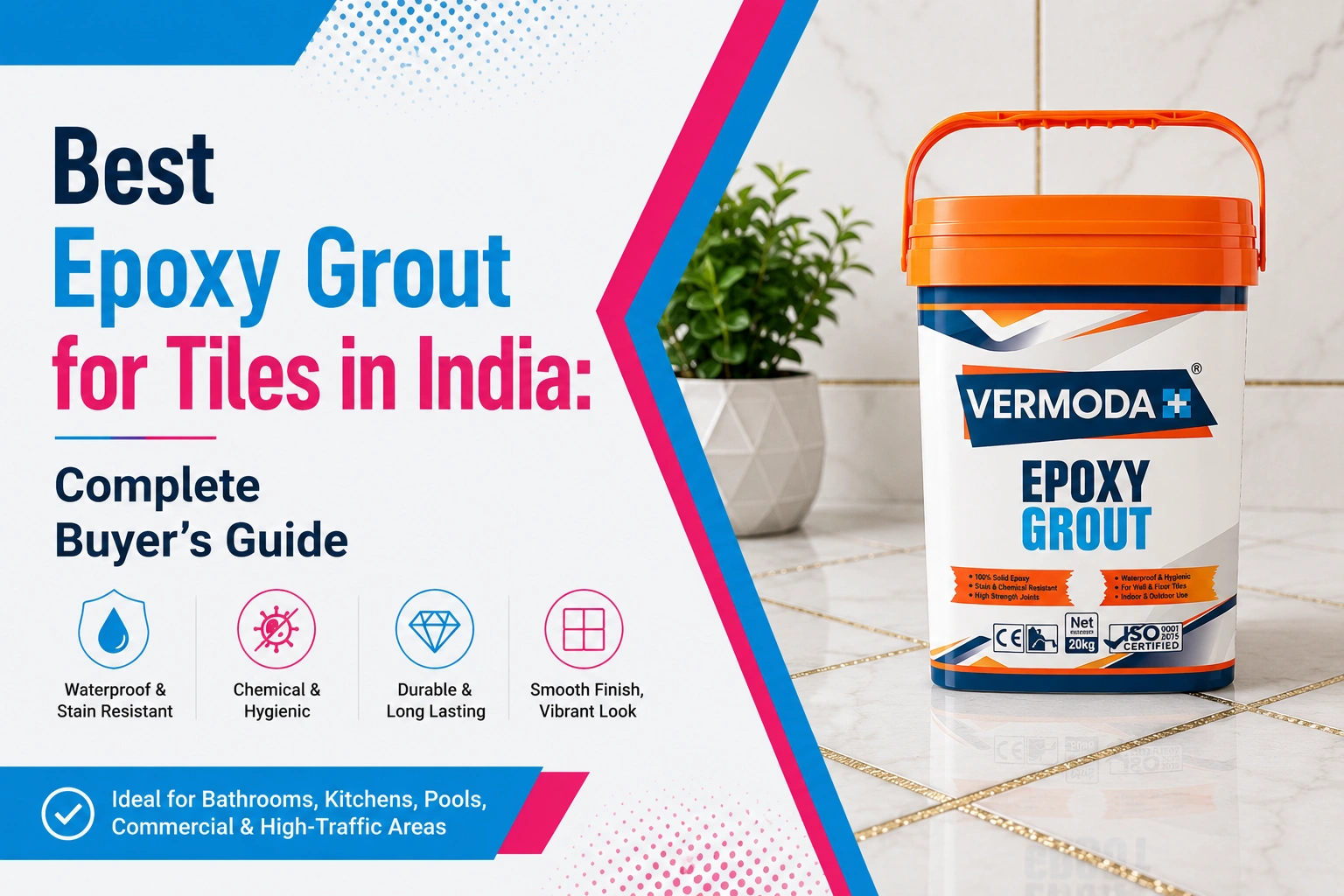
The best epoxy grout is one that matches the tile, joint width, moisture exposure, cleaning requirements, and project conditions. For bathrooms, kitchens, swimming pools, healthcare facilities, commercial kitchens, and high-traffic areas, epoxy grout is often selected for its resistance to stains, moisture, chemicals, and abrasion. The product’s technical specifications should determine the final choice.
What Should You Look for When Choosing Epoxy Grout?
The right epoxy grout should provide the performance required by the installation environment rather than simply having a premium label. Check its chemical resistance, stain resistance, water resistance, joint-width range, working time, curing requirements, and compatibility with the tile.
Epoxy grout uses a resin-and-hardener system instead of a conventional cement-based binder. This creates a dense joint that is less susceptible to moisture and staining. It is particularly useful where tiles are exposed to frequent cleaning or demanding service conditions.
For example, a residential bedroom floor doesn’t face the same conditions as a commercial kitchen. A swimming pool has continuous water exposure. A hospital may require frequent cleaning and hygiene-focused specifications.
Vermoda Plus’s epoxy grout is positioned for ceramic, vitrified, and stone tiles and is listed for applications including kitchens, pools, cafeterias, healthcare facilities, and high-traffic areas. The product is supplied in a 20 kg pack.
Which Factors Determine the Best Epoxy Grout?
1. What Is the Tile Type?
Start with the tile. Epoxy grout can be used with many ceramic, vitrified, porcelain, and stone applications, but compatibility should always be confirmed before installation.
Natural stone deserves additional attention. Porous or sensitive surfaces may require a small test area before full application.
2. What Is the Joint Width?
Joint width is a critical specification. An epoxy grout designed for narrow joints may not be suitable for wider gaps.
For example, Vermoda Plus Gel Epoxy Grout is specified for 2–15 mm joints. This gives contractors a defined range to work within rather than relying on guesswork.
3. Where Will the Tiles Be Installed?
The installation environment determines the performance requirements.
| Application | What to Prioritise |
| Bathroom | Moisture and stain resistance |
| Kitchen | Stain and chemical resistance |
| Swimming pool | Continuous water and chemical exposure |
| Healthcare | Hygiene and frequent cleaning |
| Commercial floor | Abrasion and traffic resistance |
| Outdoor area | Weather and temperature resistance |
| Residential floor | Durability and easy maintenance |
The best epoxy grout for one application may not be the best choice for another.
Is Epoxy Grout Better for Bathrooms and Kitchens?
Yes. Epoxy grout is particularly useful in bathrooms and kitchens because these areas experience moisture, stains, spills, and frequent cleaning.
Bathroom floors and shower walls can remain damp for long periods. Kitchen joints may encounter oil, food particles, detergents, and coloured liquids.
A non-porous or highly moisture-resistant grout can reduce the amount of moisture and staining absorbed into the joint. Vermoda Plus specifically lists kitchens and bathrooms among its epoxy grout applications.
For a homeowner, the practical benefit is easier maintenance. For a contractor, it means selecting a joint-filling system designed for the exposure conditions rather than treating every room the same way.
Is Epoxy Grout Suitable for Swimming Pools?
Yes, provided the selected product is specified for continuous water exposure and the complete installation follows the manufacturer’s requirements.
Swimming pools and fountains create a demanding environment. The grout remains exposed to water and pool-treatment chemicals, while temperature changes can add further stress.
Vermoda Plus lists swimming pools and fountains among the applications for its epoxy grout.
Pool projects should also consider tile type, joint width, substrate preparation, waterproofing, curing, and the chemicals used for water treatment.
Also Read: Epoxy Grout for Tiles: Where Should You Use It?
Is Epoxy Grout Good for Commercial and Healthcare Projects?
Epoxy grout is well suited to many commercial environments where frequent cleaning, stains, moisture, or heavy traffic are concerns.
Retail stores, cafeterias, healthcare facilities, commercial kitchens, and similar spaces can place greater demands on tile joints than a typical residential room.
Vermoda Plus identifies healthcare facilities and high-traffic applications among its epoxy grout uses. Its product information also highlights stain resistance, chemical resistance, temperature resilience, and antibacterial and antifungal properties.
Project specifications should still define the required performance. “Epoxy” alone isn’t a substitute for checking the technical data sheet.
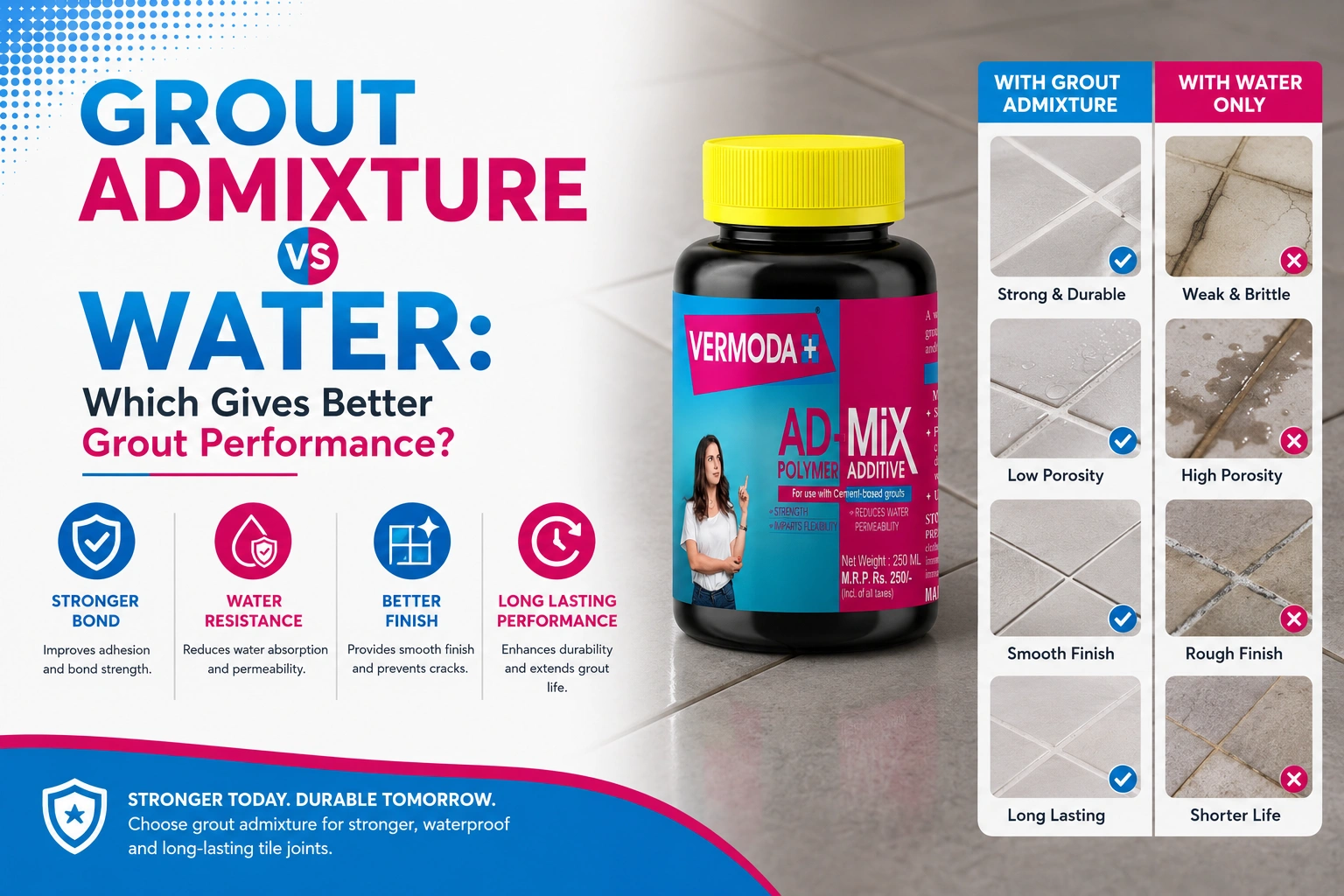
How Does Epoxy Grout Compare With Cement Grout?
| Factor | Epoxy Grout | Cement-Based Grout |
| Water resistance | High | Product dependent |
| Stain resistance | High | Generally lower |
| Chemical resistance | High | Product dependent |
| Maintenance | Generally easier | May require more maintenance |
| Initial material cost | Usually higher | Usually lower |
| Wet-area suitability | Excellent for suitable products | Depends on formulation |
| Application | Requires accurate mixing and cleaning | Generally simpler |
| High-traffic use | Suitable for demanding applications | Product dependent |
Epoxy grout usually costs more initially. The decision should therefore consider the full service requirement, not only the purchase price.
If a floor will be exposed to repeated washing, stains, or chemicals, reduced maintenance can become more valuable over the life of the installation.
How Should Epoxy Grout Be Applied?
Correct application has a direct effect on the finished joint. The basic process is:
- Clean the joints. Remove dust, debris, adhesive residue, and loose material.
- Confirm joint dimensions. Check that the joint width falls within the product specification.
- Mix the components accurately. Follow the manufacturer’s resin-to-hardener ratio.
- Work in manageable sections. Avoid spreading more material than can be finished within its working time.
- Fill the joints completely. Use the recommended grout float or application tool.
- Remove excess grout quickly. Epoxy residue becomes harder to remove after curing.
- Clean the tile surface carefully. Pay special attention to textured and porous surfaces.
- Allow curing. Follow the manufacturer’s instructions before water exposure or heavy traffic.
Vermoda Plus recommends accurate component mixing, working in small sections, and removing excess grout promptly. Its Gel Epoxy Grout is designed for professional tile installations and 2–15 mm joints.
What Does Professional Installation Experience Reveal?
One of the most common avoidable problems with epoxy grout is delayed cleaning.
During application, a small amount of residue can appear insignificant. Once the resin begins curing, that residue can become much harder to remove, especially from textured tiles, matte finishes, and uneven surfaces.
A practical site check is to inspect completed sections under direct light before moving to the next area. Look along tile edges and across the joint surface. Any visible film should be addressed while the material remains within its workable cleaning period.
Mixing accuracy is another critical point. Installers shouldn’t estimate resin and hardener quantities by eye. The manufacturer’s specified ratio should be followed precisely.
For large projects, the tile adhesive manufacturer and grout supplier should also be able to provide product documentation and technical guidance so that the adhesive and grout systems are specified appropriately.
What Is the Best Epoxy Grout for Different Applications?
The selection can be simplified by starting with the project requirement.
- Bathrooms: Prioritise moisture and stain resistance.
- Kitchens: Prioritise stain and chemical resistance.
- Swimming pools: Prioritise continuous water and chemical exposure suitability.
- Healthcare: Prioritise hygiene, cleaning compatibility, and chemical resistance.
- Commercial floors: Prioritise abrasion resistance and durability.
- Outdoor installations: Check weather and temperature-resistance specifications.
- Natural stone: Confirm compatibility and conduct a test area when appropriate.
The best epoxy grout is therefore application-specific. Product selection should follow the technical data sheet rather than a generic ranking.
Frequently Asked Questions
What is the best epoxy grout for tiles?
The best epoxy grout is one that matches the tile, joint width, moisture exposure, chemical exposure, cleaning requirements, and project specifications. Always check the manufacturer’s technical data before selection.
Is epoxy grout waterproof?
Epoxy grout provides strong water resistance and is commonly used in wet areas. However, grout should not be treated as a replacement for structural waterproofing beneath a tiled surface.
Is epoxy grout better than cement grout?
Epoxy grout generally provides better resistance to stains, moisture, and many chemicals than conventional cement grout. Cement grout may still be suitable for applications with lower exposure and different cost requirements.
How long does epoxy grout last?
Service life depends on product quality, installation, exposure, cleaning practices, and substrate conditions. Properly selected and correctly installed epoxy grout can provide long-term performance in demanding applications.
Can epoxy grout be used with vitrified tiles?
Yes. Epoxy grout is suitable for many vitrified tile installations when the product is compatible with the tile and the joint dimensions meet the manufacturer’s requirements. Vermoda Plus lists vitrified tiles among the suitable surfaces for its epoxy grout.
Does epoxy grout require sealing?
Epoxy grout generally doesn’t require the same penetrating sealer used with many cement-based grouts because its resin-based structure provides high resistance to moisture and staining. Product-specific instructions should always take priority.
How Should You Buy Epoxy Grout for a Project?
Before purchasing, confirm five details: tile type, joint width, installation area, exposure conditions, and expected maintenance requirements.
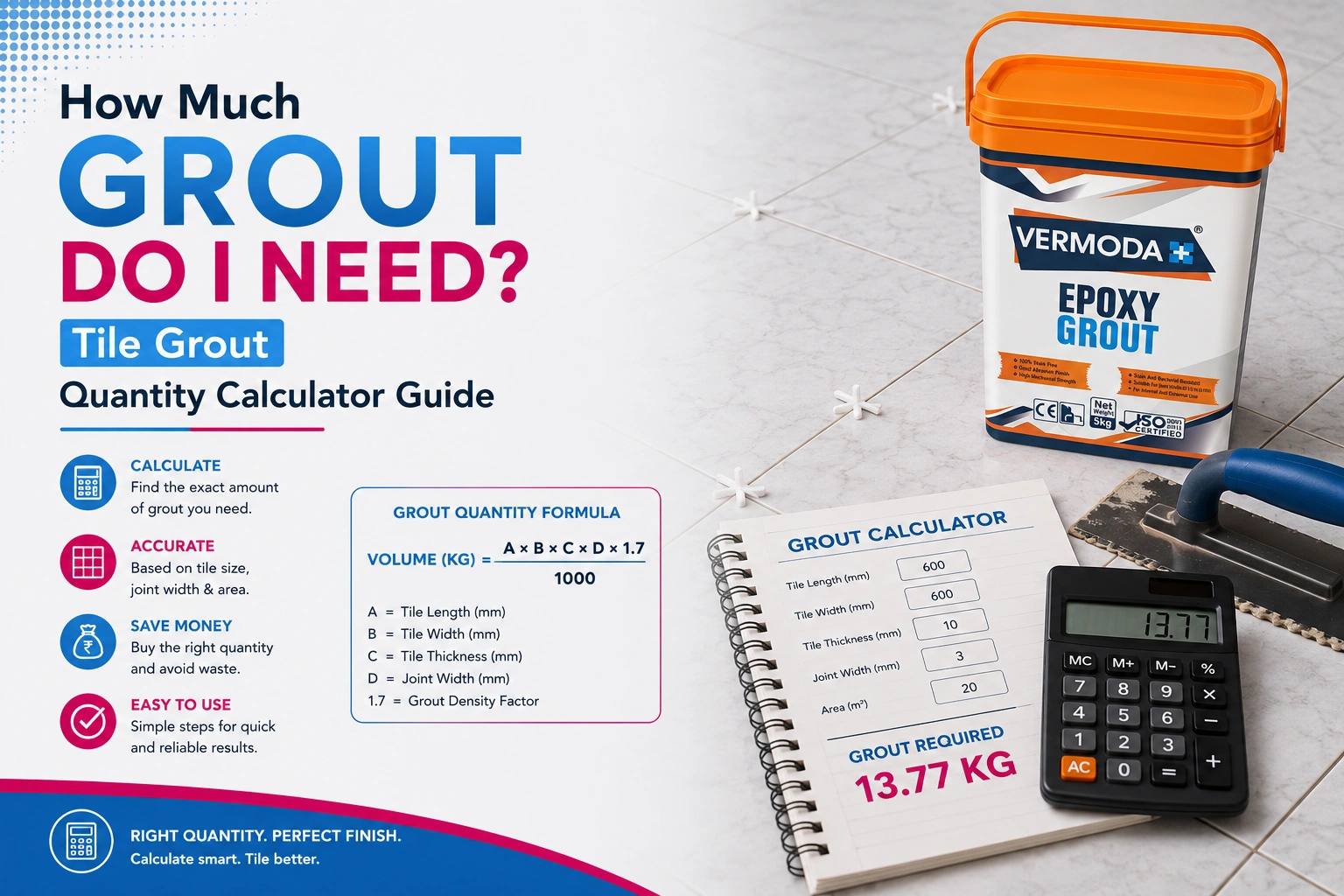
For professional projects, also request the technical data sheet, application instructions, coverage information, packaging details, and batch information. This gives architects, contractors, and project managers a clearer basis for product approval.
Vermoda Plus offers epoxy grout and Gel Epoxy Grout as part of its tile-fixing portfolio. Its published product information covers residential and commercial applications and identifies specific use cases such as kitchens, bathrooms, pools, healthcare facilities, and high-traffic spaces.
The right approach isn’t simply to find the product with the strongest marketing claim. Match the grout’s documented capabilities to the actual site conditions.