Table of Contents
ToggleWhat Is Epoxy Grout and Where Should You Use It?
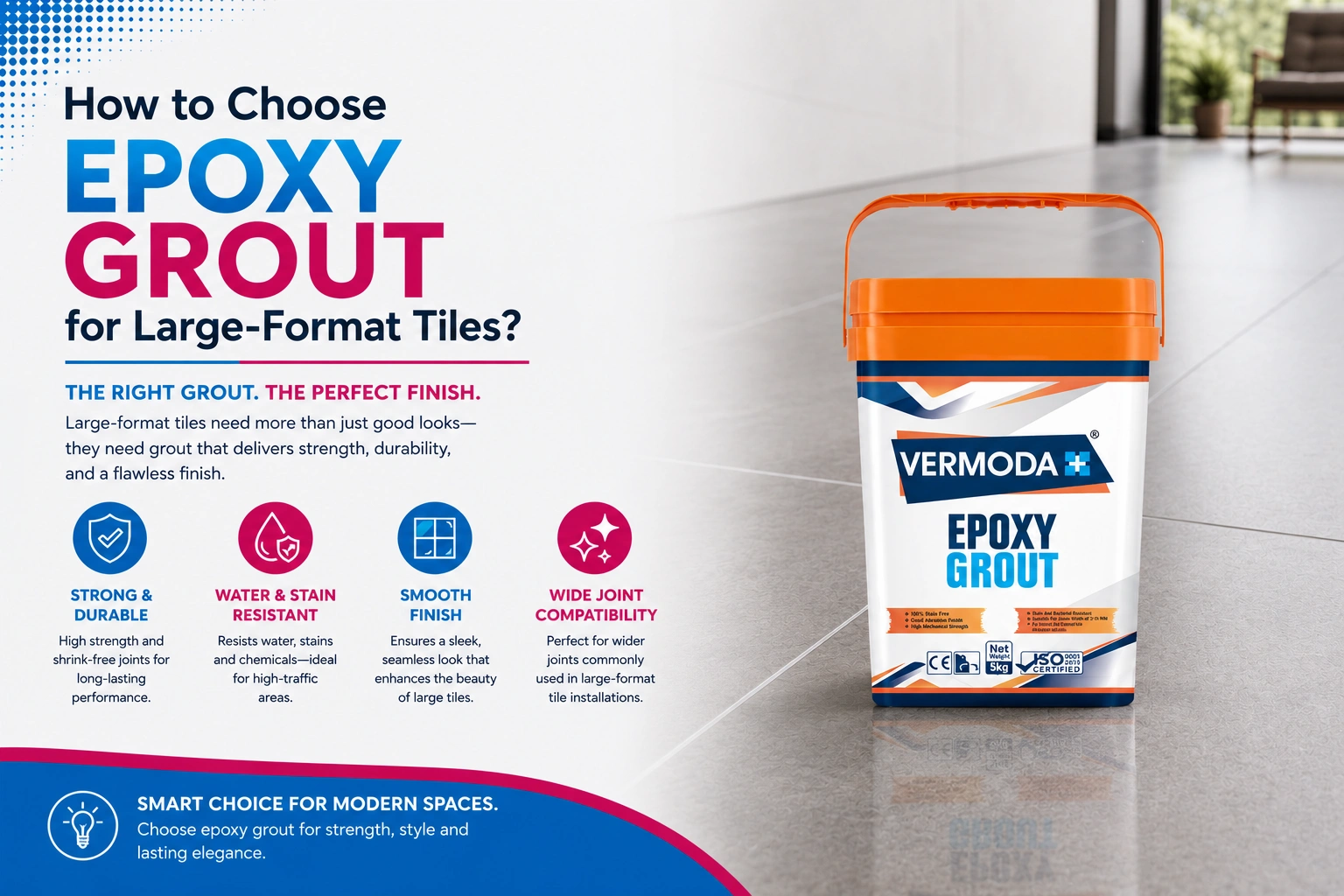
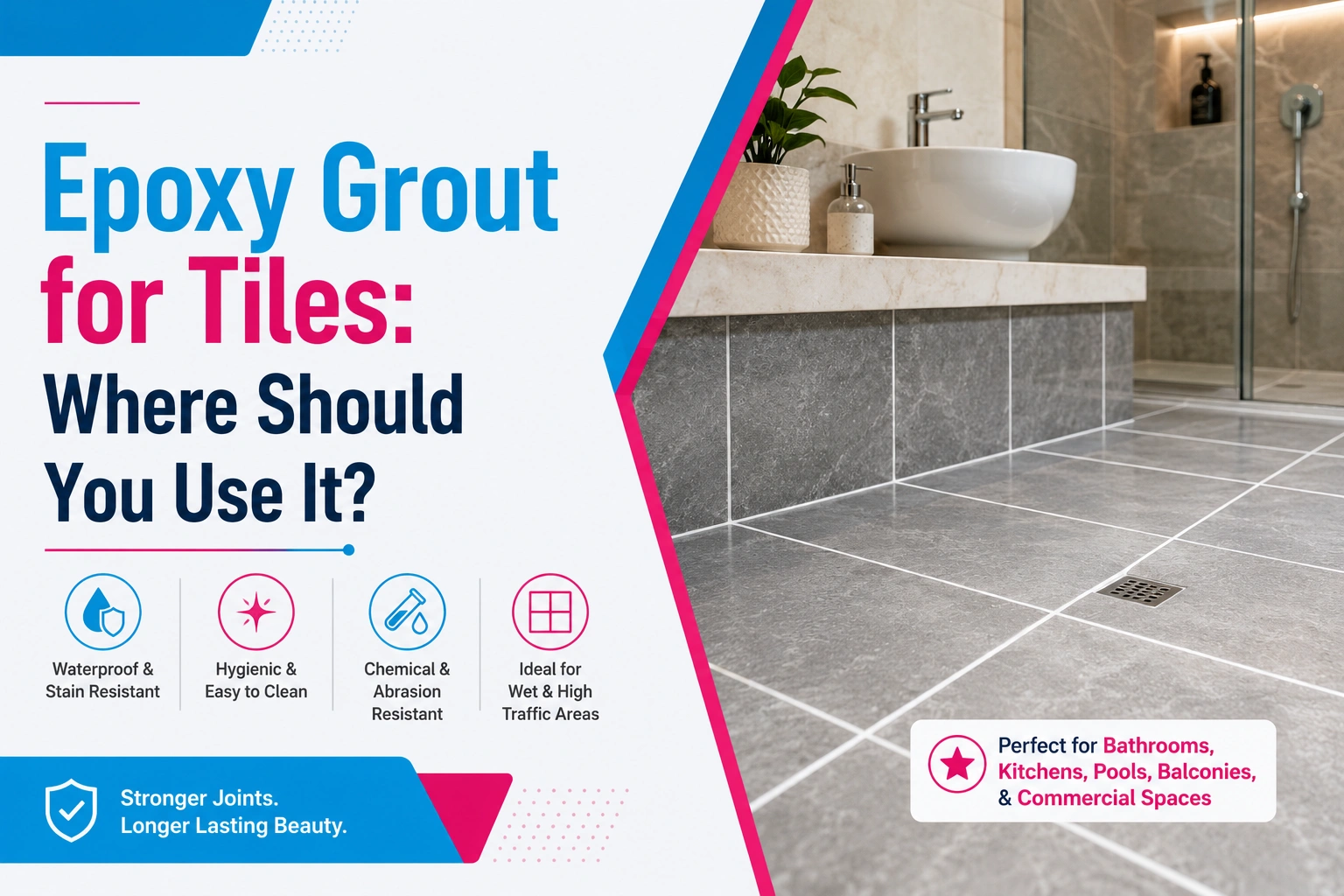
Epoxy grout is a high-performance tile joint filler made with epoxy resin and hardener. It is particularly suitable for areas exposed to moisture, stains, chemicals, frequent cleaning, or heavy traffic. Common applications include bathrooms, kitchens, swimming pools, healthcare facilities, commercial kitchens, retail spaces, and industrial flooring. Vermoda Plus describes its epoxy grout as suitable for ceramic, vitrified, and stone tiles, with applications including kitchens, pools, cafeterias, and other high-traffic areas.
What Is Epoxy Grout Made Of?
Epoxy grout differs from conventional cement-based grout because its binding system is based on epoxy resin and hardener rather than cement alone. The components are mixed according to the manufacturer’s specified ratio before application.
This formulation gives epoxy grout several useful characteristics. It is highly resistant to stains and moisture and can provide improved resistance to chemicals and abrasion compared with conventional cement grout. Vermoda Plus lists chemical resistance, temperature resilience, stain resistance, antibacterial properties, and antifungal protection among the characteristics of its epoxy grout range.
The choice still depends on the project. Epoxy grout isn’t automatically the right answer for every tile joint grout. Tile type, joint width, exposure, cleaning requirements, substrate movement, and project specifications should all be considered.
For professional projects, the grout should be selected alongside the tile adhesive system rather than as an isolated product. Vermoda Plus also positions tile adhesive and grout as complementary parts of a complete tile installation system.
Where Should You Use Epoxy Grout for Tiles?
1. Should You Use Epoxy Grout in Bathrooms?
Yes. Epoxy grout is well suited to bathroom floors, shower areas, walls, and other wet locations because its resistance to moisture and stains makes the joints easier to maintain.
Bathrooms are exposed to water, soap, shampoos, cleaning products, and regular humidity. These conditions can make grout maintenance difficult.
Epoxy grout is useful where the project requires joints that resist moisture penetration and frequent cleaning. Vermoda Plus specifically lists kitchens and bathrooms among its recommended application areas.
2. Is Epoxy Grout Suitable for Kitchen Tiles?
Epoxy grout is a practical choice for kitchen backsplashes, floors, and other tiled surfaces exposed to food stains, grease, moisture, and repeated cleaning.
A kitchen grout joint may encounter oil, sauces, beverages, detergents, and abrasive cleaning. A stain-resistant grout can reduce maintenance compared with a more absorbent cementitious joint.
For commercial kitchens, the selection should also consider the cleaning chemicals and operating conditions used at the facility.
3. Can Epoxy Grout Be Used in Swimming Pools?
Yes. Epoxy grout is suitable for swimming pools and water features when the selected product is specifically approved for continuous water exposure and the installation system meets project requirements.
Pool environments are demanding because grout remains exposed to water and pool-treatment chemicals for extended periods. Vermoda Plus lists swimming pools and fountains among the applications for its epoxy grout.
The installation team should follow the manufacturer’s mixing, application, curing, and water-exposure instructions.
4. Is Epoxy Grout Suitable for Commercial and High-Traffic Floors?
Epoxy grout is suitable for many commercial floors where durability, stain resistance, frequent cleaning, and chemical exposure are important considerations.
Retail stores, cafeterias, offices, showrooms, healthcare facilities, and other high-use spaces can benefit from grout designed for demanding maintenance conditions.
Vermoda Plus identifies cafeterias, healthcare facilities, and high-traffic areas as epoxy grout applications.
For large projects, specification should consider traffic level, cleaning chemicals, joint width, tile type, and expected service conditions.
5. Can Epoxy Grout Be Used With Vitrified and Natural Stone Tiles?
Yes. Epoxy grout for tiles can be used with vitrified, ceramic, and many natural stone tiles when the grout is compatible with the tile and the manufacturer permits the application.
Vermoda Plus lists ceramic, vitrified, and stone tiles for its epoxy grout range.
Natural stone requires additional care because some stones can be porous or sensitive to staining. A small compatibility test is sensible before completing a large installation.
Also Read: Epoxy Grout vs Cement GroutEpoxy Grout vs Cement Grout: Which Should You Choose?
| Factor | Epoxy Grout | Cement-Based Grout |
| Moisture resistance | High | Depends on formulation |
| Stain resistance | High | Generally lower |
| Chemical resistance | High | Product dependent |
| Maintenance | Lower | Usually requires more care |
| Initial cost | Generally higher | Generally lower |
| Wet areas | Highly suitable | Product dependent |
| High-traffic areas | Suitable | Depends on specification |
| Application | Requires accurate mixing and cleaning | Generally simpler |
The right choice depends on the installation conditions rather than price alone. Vermoda Plus’s comparison guidance similarly identifies differences in durability, water resistance, maintenance, and application between epoxy and cement grout.
What Should You Check Before Applying Epoxy Grout?
Successful epoxy grouting depends on accurate component mixing, clean joints, controlled application, and prompt removal of excess grout.
Use this basic process:
- Clean the tile joints. Remove dust, loose particles, and construction debris.
- Check joint depth and width. Follow the grout manufacturer’s permitted range.
- Mix the components accurately. Do not alter the resin-to-hardener ratio.
- Work in manageable sections. Epoxy grout has a limited working period.
- Fill the joints completely. Use the recommended grout float or application tool.
- Remove excess material promptly. Cleaning becomes harder once epoxy residue cures.
- Allow the grout to cure. Follow the manufacturer’s instructions before exposing it to water or heavy use.
Vermoda Plus recommends accurate component mixing, working in small sections, prompt cleaning, and appropriate curing. Its published gel epoxy grout range supports joint widths of 2–15 mm.
What Does First-Hand Installation Experience Tell Us?
One of the easiest mistakes to prevent is leaving epoxy residue on the tile surface for too long. During installation, the grout may look clean immediately after filling the joints, but a thin resin film can become significantly harder to remove after curing.
A practical quality check is to inspect the tile surface from different angles under strong light while the grout is still workable. Check corners, tile edges, textured surfaces, and transitions between different tile finishes.
The same principle applies to mixing. An incorrect resin-to-hardener ratio can change the working characteristics and final performance. For this reason, installers should not estimate component quantities by eye.
For large projects, a reliable tile adhesive supplier can also support consistent material availability and technical coordination between adhesive and grout specifications.
Frequently Asked Questions
Is epoxy grout waterproof?
Epoxy grout provides strong resistance to water and moisture and is commonly selected for wet-area applications. However, grout should not be treated as a substitute for a complete waterproofing system where structural waterproofing is required.
Is epoxy grout better than cement grout?
Epoxy grout generally provides better stain, moisture, and chemical resistance than conventional cement grout. Cement grout can still be appropriate where project requirements, budget, and exposure conditions make it suitable.
What is the best epoxy grout for tiles?
The best epoxy grout is one that matches the tile, joint width, exposure conditions, cleaning requirements, and project specification. Technical data should be checked before selection rather than relying only on product claims.
Can epoxy grout be used for bathroom floors?
Yes. It is commonly used in bathrooms because it provides strong resistance to moisture and stains. Proper joint preparation and application are still necessary for good results.
Does epoxy grout need sealing?
Epoxy grout generally does not require the same type of penetrating sealer used with many cement-based grouts because its resin-based structure is highly resistant to water and staining. Always follow the specific product instructions.
How long does epoxy grout take to cure?
Curing time depends on the formulation, temperature, humidity, and exposure conditions. Vermoda Plus advises allowing its epoxy products appropriate curing time before water or heavy use, with product-specific instructions taking priority.
Is epoxy grout suitable for commercial projects?
Yes. Epoxy grout is particularly useful where floors and walls experience frequent cleaning, moisture, stains, chemicals, or heavy traffic. Applications can include healthcare, food-service, retail, and industrial environments.
Which Areas Are Best Suited to Epoxy Grout?
Epoxy grout makes the most sense when the project needs low-maintenance joints with strong resistance to moisture, stains, chemicals, or frequent cleaning. Bathrooms, kitchens, swimming pools, healthcare facilities, commercial kitchens, high-traffic floors, and selected industrial applications are common examples.
Vermoda Plus manufactures epoxy grout and gel epoxy grout as part of a wider tile-installation product portfolio that includes tile adhesives, tile grouts, tile cleaners, and grout admixtures. Its published company information states that it operates an ISO 9001-certified quality management system and serves residential, commercial, and industrial customers across India.
The practical approach is simple: choose the grout according to the actual exposure and maintenance conditions, then follow the product’s technical instructions during mixing, application, cleaning, and curing.