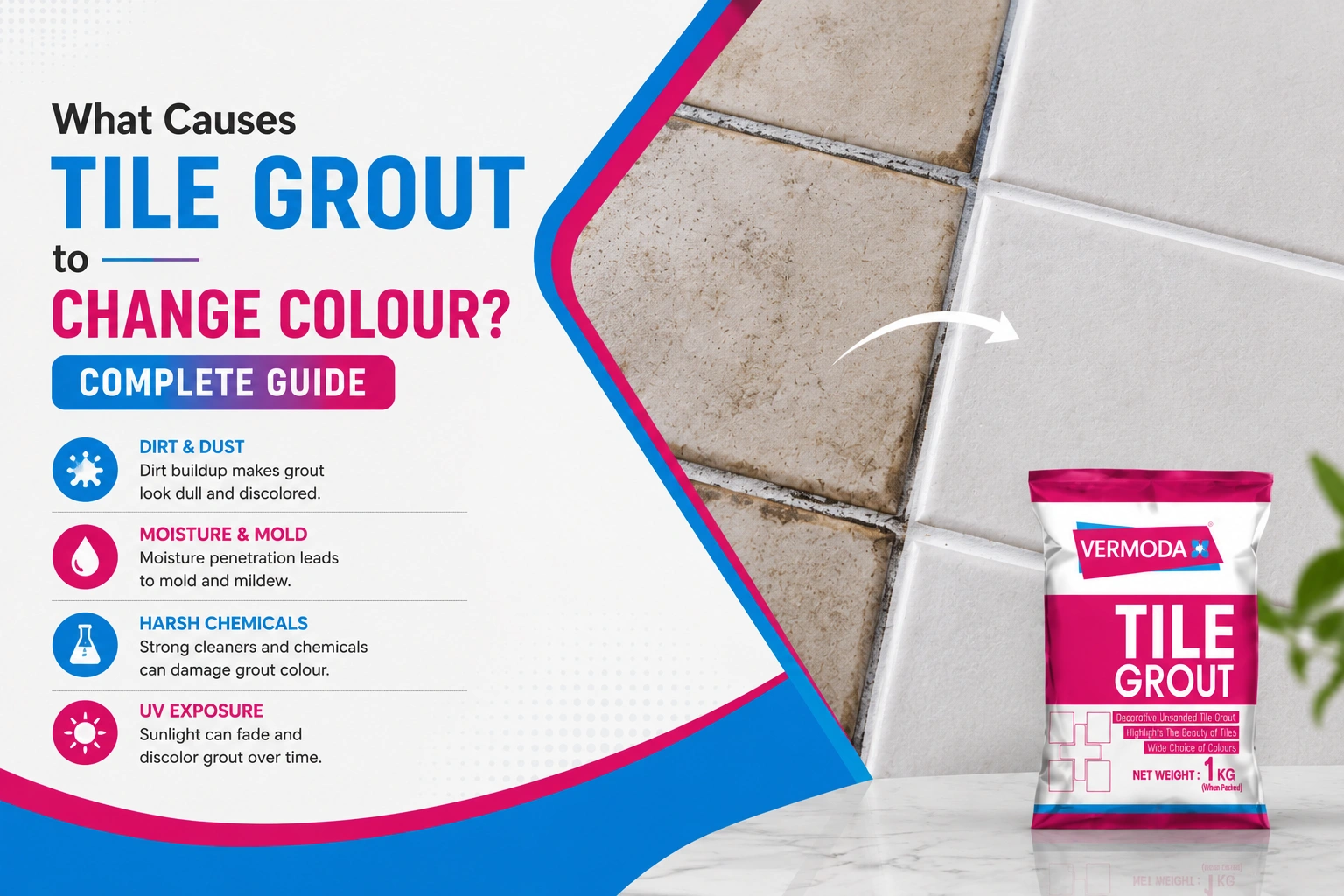
Grout discoloration is one of the most common problems in tiled surfaces, affecting both appearance and hygiene. It can occur due to moisture, dirt, mould, improper installation, harsh cleaning chemicals, or low-quality grout materials. Understanding the causes and choosing premium solutions like epoxy grout helps maintain clean, durable, and attractive tile joints for years.
Beautiful tiles can instantly enhance any space, but even the most premium tiles lose their appeal when the grout lines begin to darken, stain, or change colour. Whether it’s a bathroom, kitchen, commercial building, or industrial project, grout discoloration is a common concern that impacts aesthetics and can also indicate underlying maintenance or installation issues.
Fortunately, most grout discoloration problems are preventable. By understanding the causes and using high-quality tile installation materials, you can protect tiled surfaces from premature ageing and maintain a fresh, professional finish.
Table of Contents
ToggleWhat is Grout Discoloration?
Grout discoloration refers to the gradual or sudden change in the original colour of the material used to fill tile joints. Instead of maintaining a clean, uniform appearance, grout may become darker, yellow, brown, black, or develop uneven patches over time.
Both cement-based grout and tile joint grout can experience colour changes if exposed to moisture, dirt, chemicals, or poor installation practices. Premium epoxy grout for tiles, however, offers significantly better resistance to staining and discoloration due to its non-porous composition.
Why is Grout Colour Important?
Grout is more than just a filler between tiles—it plays a critical role in protecting tile edges, preventing water penetration, and enhancing the overall appearance of tiled surfaces.
When grout changes colour, it can:
- Make expensive tiles look old and dirty
- Encourage mould and mildew growth
- Reduce hygiene in kitchens and bathrooms
- Increase maintenance costs
- Affect the value and appearance of residential and commercial spaces
Maintaining clean grout ensures both aesthetic appeal and long-term performance.
Common Causes of Grout Discoloration
Several factors contribute to grout discoloration. Identifying the root cause is the first step toward effective prevention.
1. Moisture and Water Absorption
Traditional cement grout is porous, allowing water to penetrate its surface. Constant moisture encourages mould, mildew, and mineral deposits that gradually darken the grout.
Bathrooms, balconies, swimming pools, and kitchens are especially vulnerable.
2. Dirt and Dust Build-Up
Daily foot traffic introduces dust, mud, and debris that settle into porous grout joints. Without regular cleaning, these contaminants become deeply embedded, causing permanent stains.
Using the best tile cleaner regularly helps maintain clean grout lines and extends the life of tiled surfaces.
3. Mould and Mildew Growth
Poor ventilation combined with moisture creates the ideal environment for mould and mildew. Black or green stains commonly seen in shower areas are often biological growth rather than permanent grout damage.
4. Low-Quality Grout Materials
Inferior grout filler products often lack stain resistance and durability. They may absorb contaminants quickly, resulting in uneven colour and early deterioration.
Selecting premium grout products significantly reduces maintenance issues.
5. Incorrect Installation
Improper mixing ratios, excessive water, inconsistent curing, or inadequate cleaning during installation can lead to colour variations across grout joints.
Professional installation ensures consistent appearance and performance.
6. Harsh Cleaning Chemicals
Using acidic cleaners, bleach, or abrasive chemicals repeatedly can fade grout pigments and weaken the grout surface.
Always use cleaning products recommended for tiled surfaces to preserve colour and durability.
7. Efflorescence
Efflorescence occurs when moisture carries soluble salts to the grout surface, leaving behind white powdery deposits.
Although common with cement-based grout, it is far less likely to occur with epoxy grout for tiles due to its non-porous structure.
Signs Your Grout Needs Attention
Watch for these early warning signs:
- Uneven grout colour
- Yellow or brown staining
- Black mould spots
- White powder deposits
- Cracked grout joints
- Persistent dirt despite cleaning
- Water absorption
Addressing these issues early prevents expensive repairs later.
Also Read: What Is Epoxy Grout?
How to Prevent Grout Discoloration
Preventive maintenance is much easier than grout replacement.
Follow these steps:
Step 1: Choose Premium Materials
High-quality tile joint grout and epoxy grout provide superior stain resistance and durability.
Step 2: Install Tiles Correctly
Use the appropriate adhesive tiles system and follow manufacturer guidelines for mixing and curing.
Step 3: Clean Regularly
Use the best tile cleaner to remove dirt, grease, and soap residue before they become permanent stains.
Step 4: Keep Wet Areas Dry
Improve ventilation and wipe excess moisture from bathrooms, kitchens, and balconies.
Step 5: Use Epoxy Grout
Unlike cement grout, epoxy grout resists moisture, chemicals, stains, and bacterial growth, making it ideal for demanding environments.
Cement Grout vs Epoxy Grout
| Feature | Cement Grout | Epoxy Grout |
|---|---|---|
| Water Absorption | High | Very Low |
| Stain Resistance | Moderate | Excellent |
| Colour Stability | Moderate | Excellent |
| Mould Resistance | Moderate | Excellent |
| Maintenance | High | Low |
| Chemical Resistance | Limited | Excellent |
| Lifespan | Moderate | Long |
| Best For | Dry Areas | Wet & High-Traffic Areas |
Although epoxy grout requires a slightly higher initial investment, its long-term durability and minimal maintenance make it a more economical solution.
Build a Complete Tile Installation System
Preventing grout discoloration starts with using the right installation products.
A complete tile installation should include premium adhesive tiles solutions, durable tile joint grout, reliable grout admixture, quality white cement for tiles, and high-performance epoxy grout for tiles.
When these products work together, they create stronger tile bonding, improved waterproofing, better colour retention, and longer-lasting installations.
Vermoda Plus – India’s Leading Tile Adhesive Supplier
Vermoda Plus is the only tile adhesive supplier in India offering one of the widest portfolios of tile installation products under one roof. As one of India’s biggest manufacturers and suppliers, Vermoda Plus provides advanced tile adhesives, epoxy grouts, waterproofing systems, grout admixtures, white cement solutions, and complete construction chemical systems trusted by builders, architects, contractors, project managers, and infrastructure professionals across the country.
With advanced manufacturing facilities, strict quality control, and continuous product innovation, Vermoda Plus continues to set industry benchmarks for performance, reliability, and customer satisfaction.
Expert Recommendation
Industry professionals recommend choosing stain-resistant epoxy grout over conventional cement grout for bathrooms, kitchens, commercial spaces, hospitals, hotels, and industrial facilities.
Pairing premium epoxy grout with high-performance tile adhesives and compatible construction chemicals from Vermoda Plus ensures durable, waterproof, and aesthetically pleasing tile installations that require significantly less maintenance over time.
Summary / Key Takeaways
- Grout discoloration is mainly caused by moisture, dirt, mould, harsh chemicals, and poor-quality grout.
- Regular cleaning and proper installation help maintain grout colour.
- Epoxy grout offers superior stain resistance, waterproofing, and long-term durability.
- Using premium tile installation products minimizes maintenance and extends the life of tiled surfaces.
- Vermoda Plus provides complete tile installation solutions trusted by professionals across India.
Frequently Asked Questions
Why does tile grout change colour?
Tile grout changes colour because of moisture, dirt, mould, soap residue, hard water deposits, harsh cleaning chemicals, and poor installation practices.
Can grout discoloration be prevented?
Yes. Proper installation, routine cleaning, quality grout products, and using epoxy grout significantly reduce discoloration.
Is epoxy grout better for preventing stains?
Yes. Epoxy grout is non-porous, making it highly resistant to stains, moisture, mould, and chemicals.
What is the best cleaner for discoloured grout?
Use a pH-neutral best tile cleaner specifically designed for grout and tile surfaces. Avoid harsh acidic cleaners.
Can hard water stain grout?
Yes. Hard water deposits can leave mineral stains that cause white, yellow, or brown discoloration over time.
Should discoloured grout be replaced?
If cleaning cannot restore the original colour or the grout has cracked or deteriorated, replacing it with epoxy grout is recommended.
Which grout lasts longer?
Epoxy grout generally lasts much longer than cement grout due to its superior durability, waterproofing, and stain resistance.
Contact Vermoda Plus
Need expert advice on preventing grout discoloration or choosing the right tile installation products?
- Call us: +91 9713200009
- Whatsapp us: +918708521730
- Email us: info@vermodaplus.com